How to Use Coloring Pages to Teach Letters and the Alphabet
Learning the alphabet is an important first step toward reading, but just repeating letter names can get boring for young children. Using printable coloring pages turns alphabet practice into a fun, creative activity instead of a lesson.
When children color a big letter, say its name, and link it to a familiar picture, they learn in different ways. They see the letter, hear its sound, use their hands, and connect it to something they already know.
Keep the activity simple and playful. Preschoolers don’t need to finish the whole alphabet at once. One or two letters at a time is usually enough.
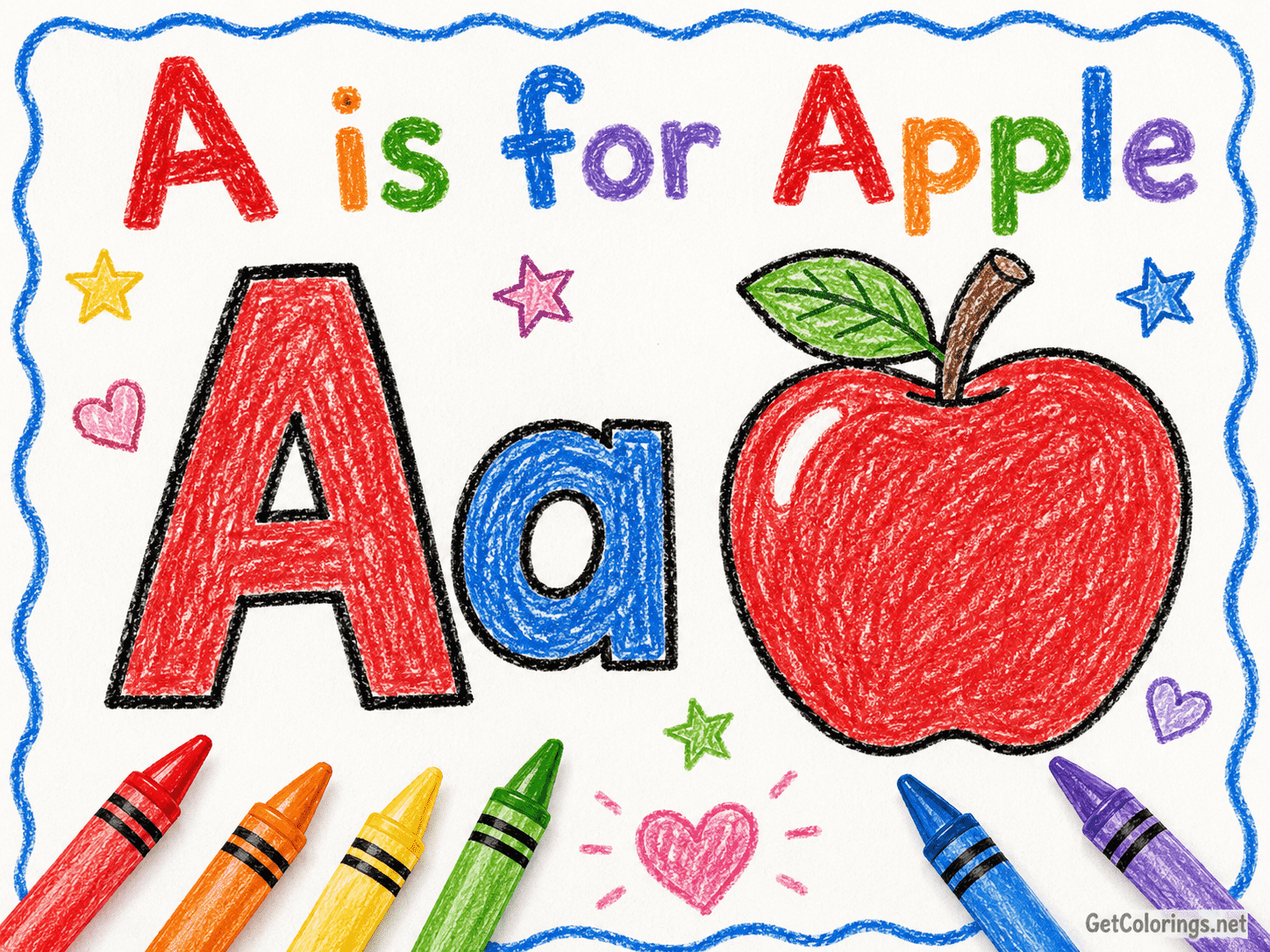
Begin with big uppercase letters that have thick outlines and lots of space for coloring. Uppercase letters are usually easier for beginners to spot because their shapes stand out. Later, add the matching lowercase letter on the same page.
For example, a page might show:
A a - Apple
B b - Butterfly
C c - Cat
Ask the child to say the letter before picking a color. Then name the picture together and point out its starting sound: “A is for apple. Apple begins with the sound /a/.”
Keep your explanation short. The goal is to help children see the link between the letter and the word, not to give a long phonics lesson.
Alphabet pages work best when the pictures are familiar. Kids are more likely to remember “D is for dog” than a word they don’t know. Good subjects include animals, food, toys, vehicles, and everyday things around the house.
Let children pick their own examples, too. If a child thinks of the letter B as ball instead of bear, use ball. Personal choices often help kids remember letters better.
Choose pages that fit your child’s age and hand skills. Younger kids need big letters and simple pictures, while older preschoolers might like pages with several items that start with the same sound. Our guide on How to Choose the Right Coloring Pages for Your Child’s Age explains how to pick designs that are fun but not too hard.
Another easy idea is to make an alphabet color code. Ask the child to color uppercase letters one color and lowercase letters another. For example, all uppercase letters could be blue and all lowercase letters yellow.
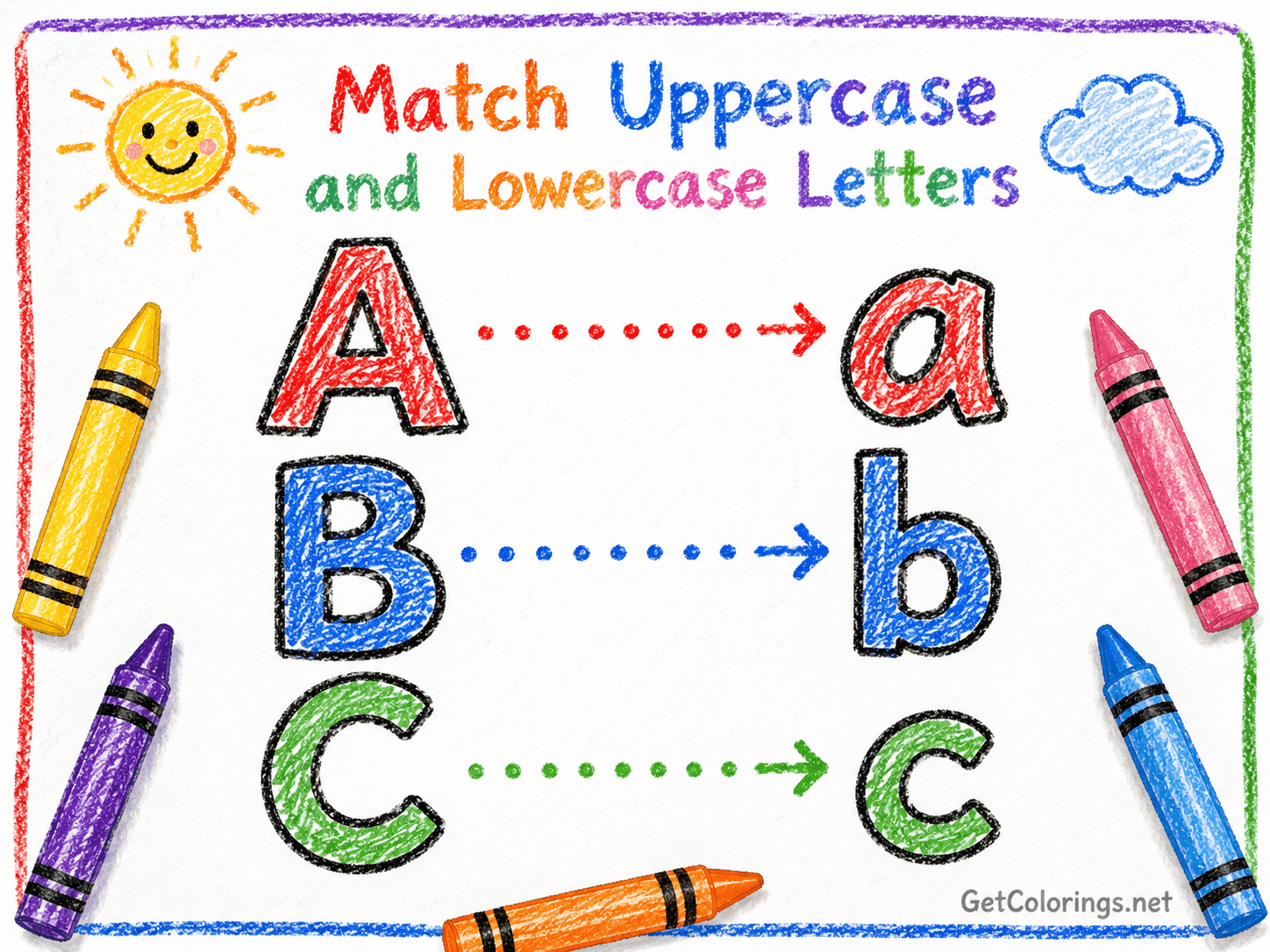
This helps kids see that “A” and “a” look different but are the same letter.
You can also put several letters on one page and turn it into a letter hunt. Say, “Can you find every letter M and color it green?” Add a few other letters so the child has to look closely instead of coloring everything.
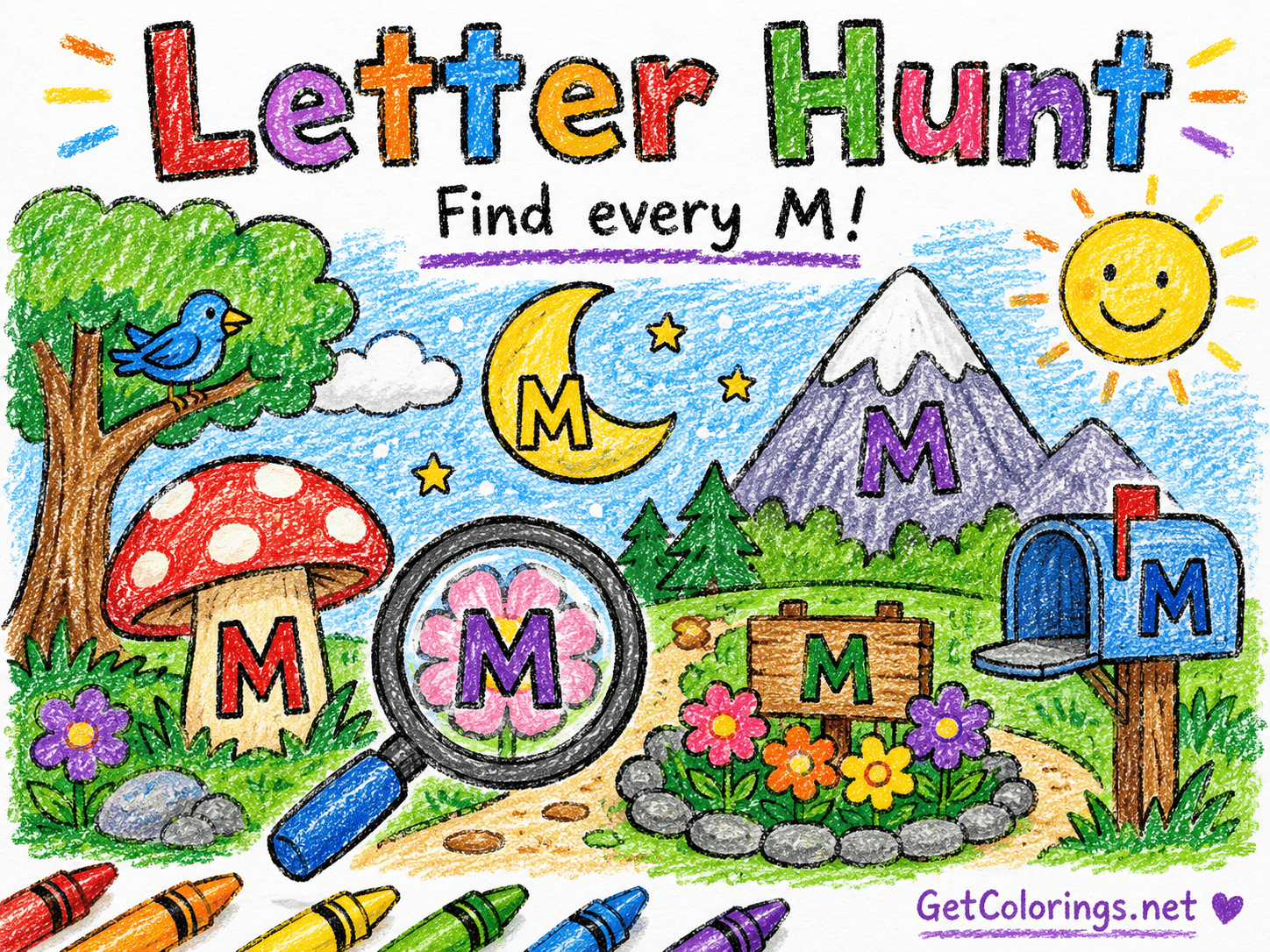
This kind of activity helps kids practice both alphabet recognition and paying attention to details, as explained in What Skills Can Children Practice Through Coloring? A Parent’s Guide.
As children get more comfortable with letters, add simple sound-based instructions. For example, a page might show a sun, a cat, a fish, and an apple. Ask the child to color the picture that starts with S.
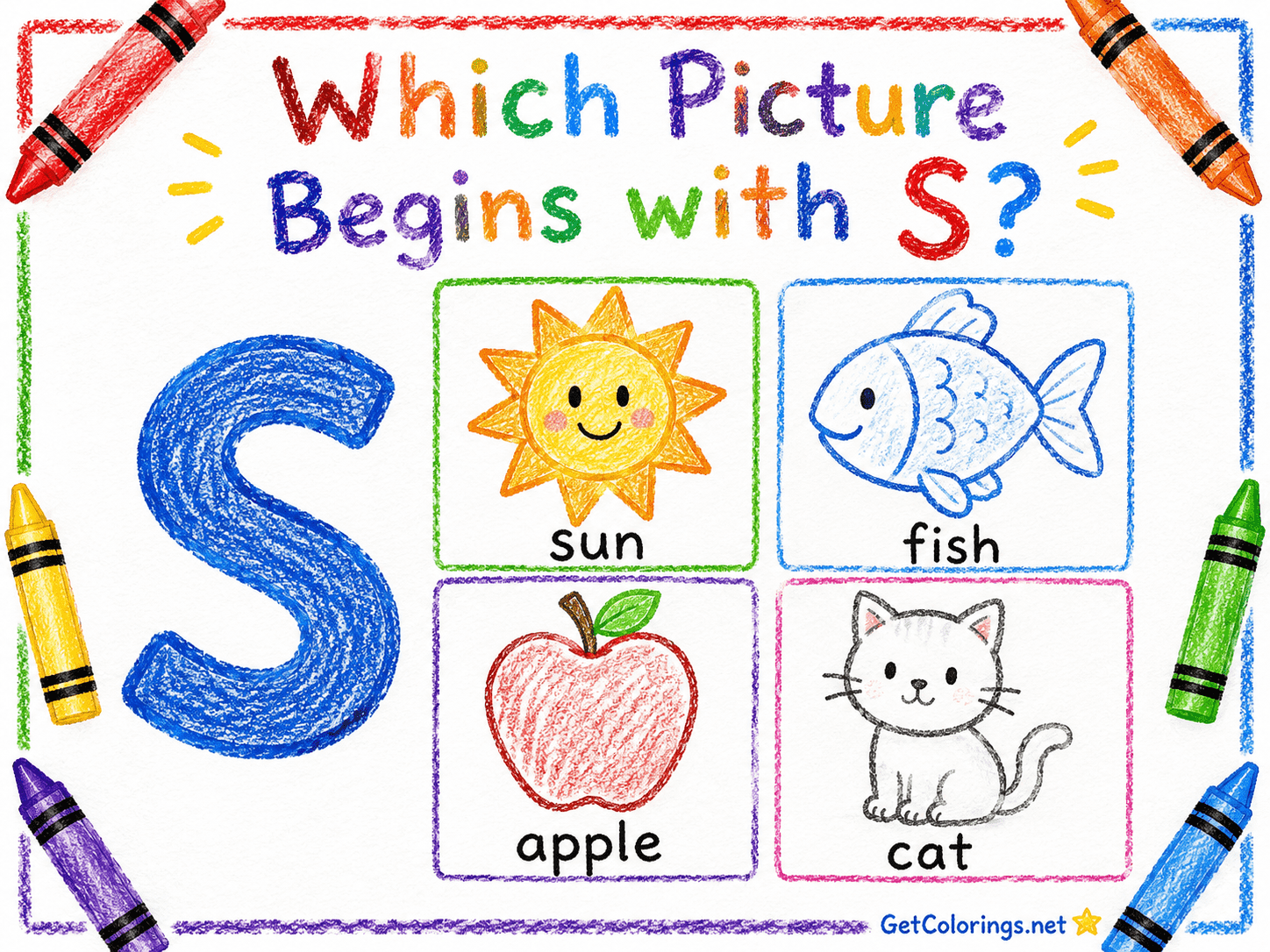
Don’t show too many pictures at once. Two or three choices are enough for beginners.
Alphabet coloring pages can also help with early writing. After coloring a letter, kids can trace it with a finger, crayon, or pencil. Start with big dotted letters and let the child trace the shape slowly.
Don’t worry about perfect tracing. Just holding a crayon and following the line takes practice. The tips in How to Teach a Child to Color Inside the Lines Without Pressure can help keep these early activities fun.
Kids might also like decorating letters instead of just coloring them in. They can add stripes, dots, stars, hearts, or little drawings inside a big letter.
A big S could be filled with tiny suns. The letter F might have flowers, and D could have dinosaur patterns.
This gives kids a reason to think about words that start with the letter while letting them be creative.
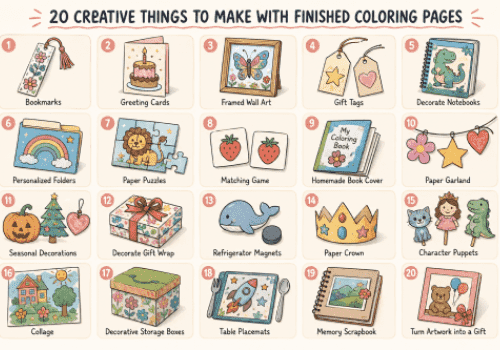
Making a homemade alphabet book can turn single pages into a bigger project. Print one page for each letter and let your child finish the book over time. Add their name to the cover and include a blank page for them to draw their favorite letter.
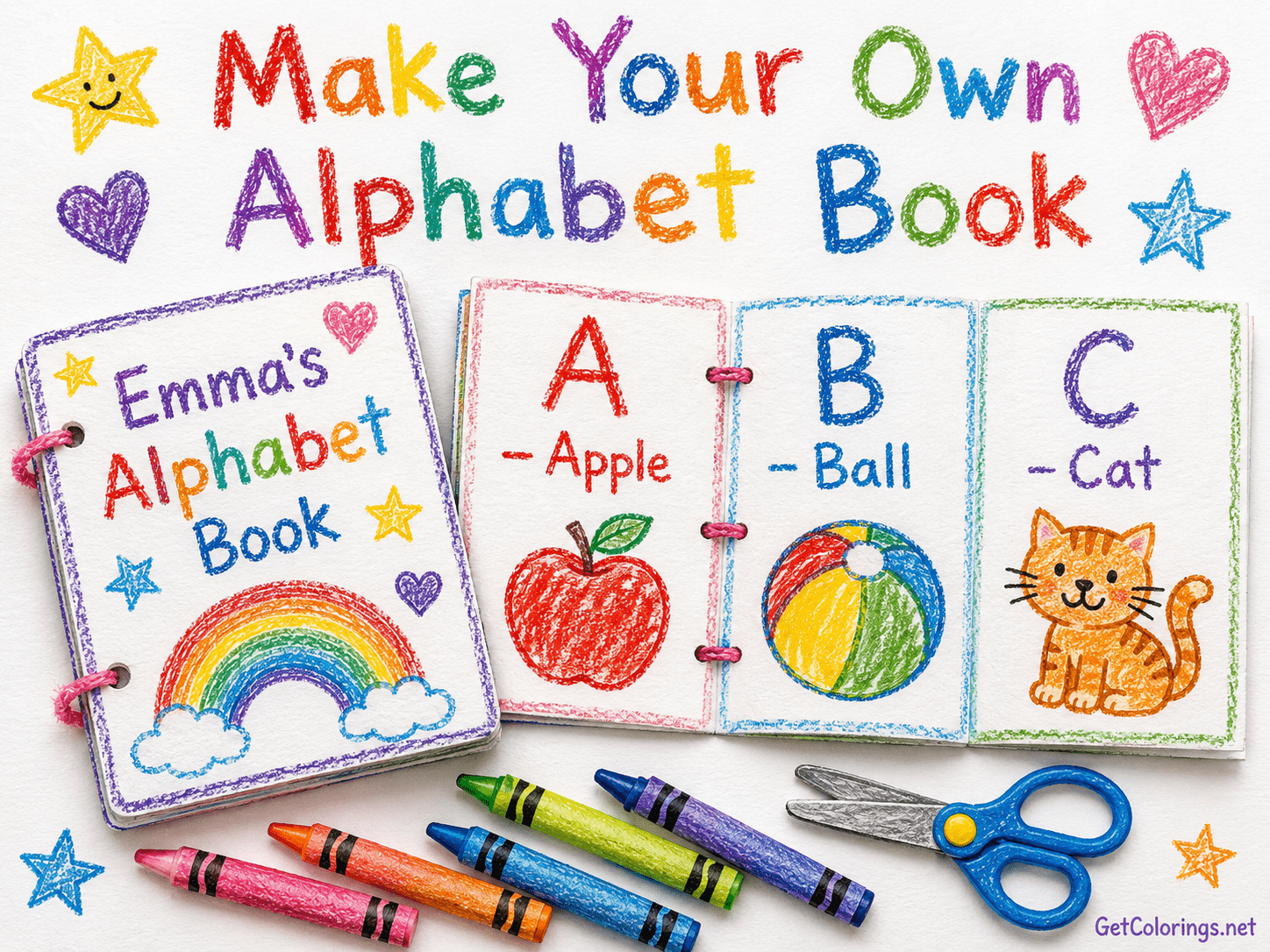
You can use the steps in Turn Your Ideas into a Personalized Coloring Book to organize, print, and put together the finished alphabet book.
Teachers can use these activities in classroom learning centers, for early finishers, listening practice, or vocabulary review. Students might color a letter, label the matching picture, and say another word that starts with the same sound. More classroom ideas are in How Teachers Can Use Printable Coloring Pages in the Classroom.
Parents can also link letters with numbers. After your child colors the letter B, ask them to color three balloons. After F, they might count five flowers. This connects alphabet practice with the activities in 10 Fun Ways to Teach Numbers with Coloring Pages.
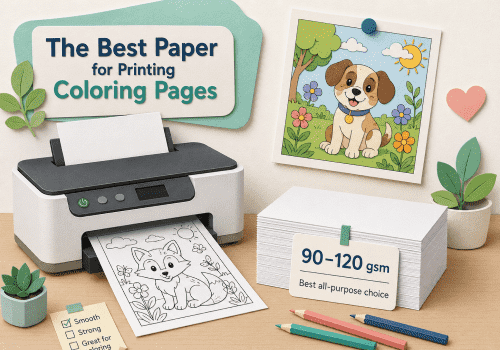
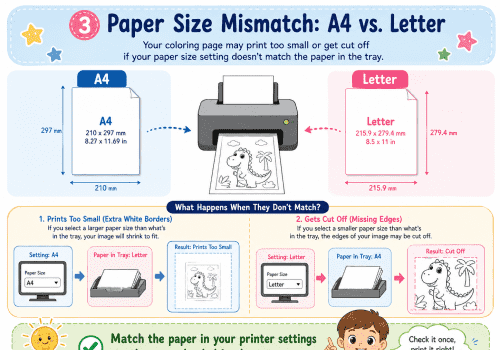
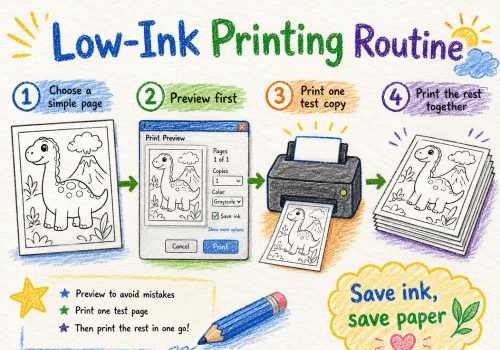
Before printing, check that the letter outlines are dark, the picture is clear, and the page fits the paper. The guide How to Print Coloring Pages at Home explains helpful settings for page size, margins, print quality, and black-and-white printing.
Most importantly, follow your child’s interests. Some kids like finishing several letters, while others enjoy spending lots of time decorating one page. Both ways are helpful.
Alphabet coloring pages work best as part of a bigger learning routine with songs, books, talking, drawing, and spotting letters in daily life. Point out letters on food packages, signs, toys, and your child’s name.
A coloring page can introduce a letter, but seeing and using it in everyday life helps your child understand why it matters.
Final Thoughts
Printable coloring pages make early alphabet practice more visual, hands-on, and fun.
Kids can color big letters, match uppercase and lowercase, link letters with familiar pictures, hunt for repeated letters, practice beginning sounds, and slowly make their own alphabet book.
Keep each activity short, use words your child knows, and don’t expect perfect coloring or tracing. The main goal is to make letters feel familiar and interesting, one page at a time.