The Best Paper for Printing Coloring Pages at Home
The type of paper you use for a coloring page can make a big difference.
A design that looks sharp on your screen might feel flimsy once printed, especially if a child presses hard with crayons or uses markers that bleed through. But very thick paper can be more expensive, slower to print, or might not feed well in a home printer.
Most families don’t need to buy special artist paper for every project. The best paper depends on the coloring tools, your child’s age, and what you want to do with the finished picture.
Regular Printer Paper Is Fine for Everyday Coloring
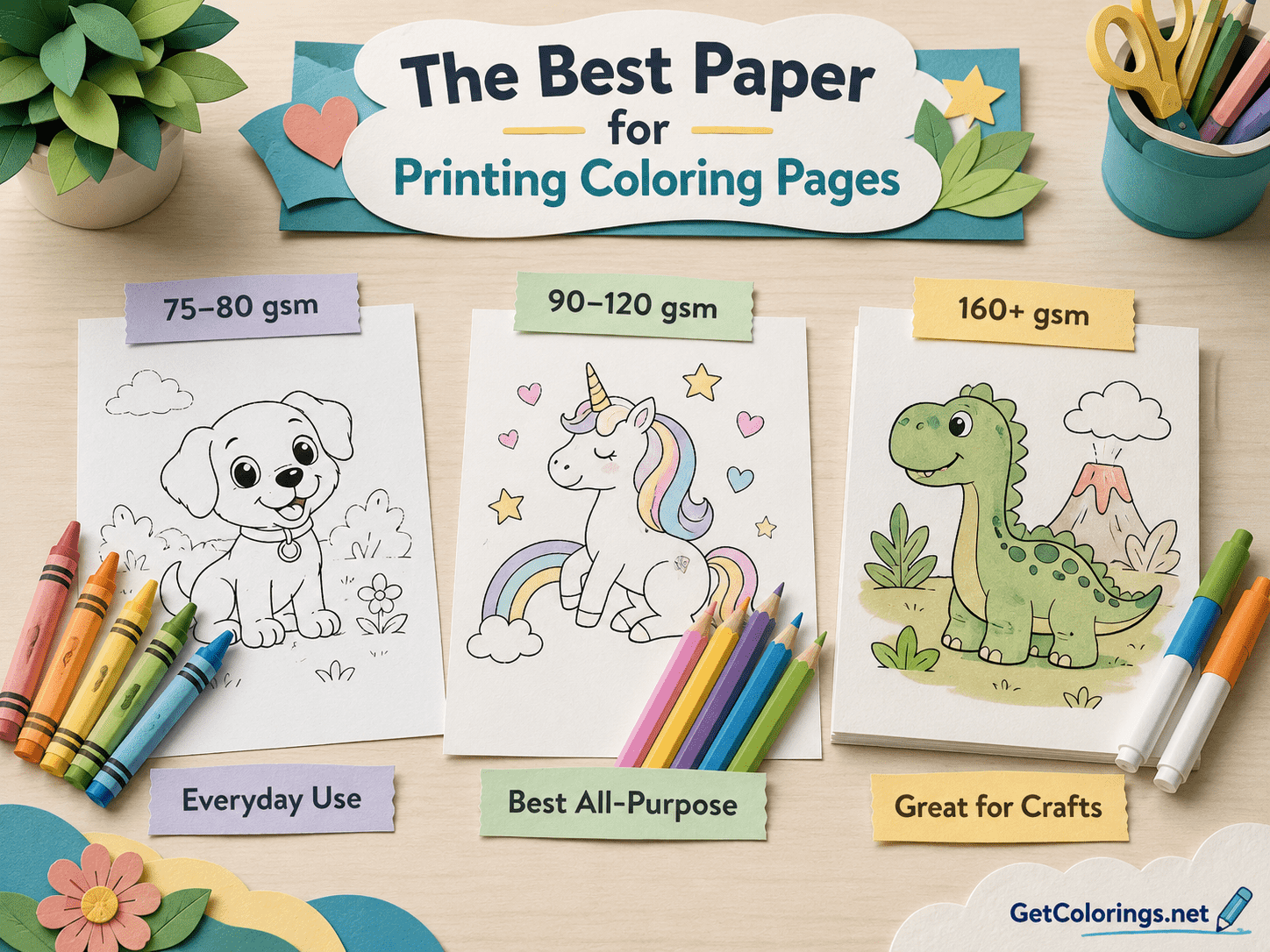
Standard printer paper, usually about 75-80 gsm, works well for everyday coloring with crayons and colored pencils.
It’s affordable, easy to find, and works in almost any home printer. That makes it a practical choice for kids who color often or for teachers printing lots of copies for a class.
Regular paper is suitable for:
- Simple coloring activities
- Crayons
- Colored pencils
- Practice worksheets
- Alphabet and number pages
- Pages that will not be kept for a long time
The main downside is that it can wrinkle or tear if a child presses hard. Marker ink can also bleed through to the table or the next page.
If you’re using markers on regular paper, put a blank sheet underneath. It won’t stop the ink from soaking through the coloring page, but it will protect the table.
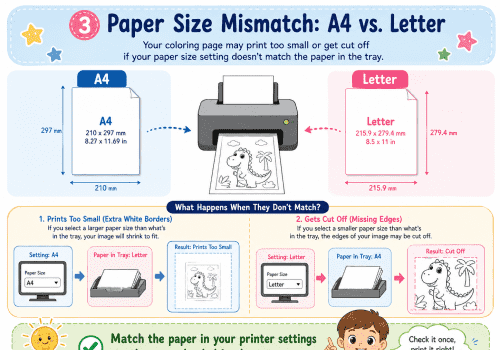
For tips on paper size, margins, and scaling, check out How to Print Coloring Pages at Home. Getting your printer settings right is just as important as choosing the right paper.
Slightly Thicker Paper Is the Best All-Purpose Option
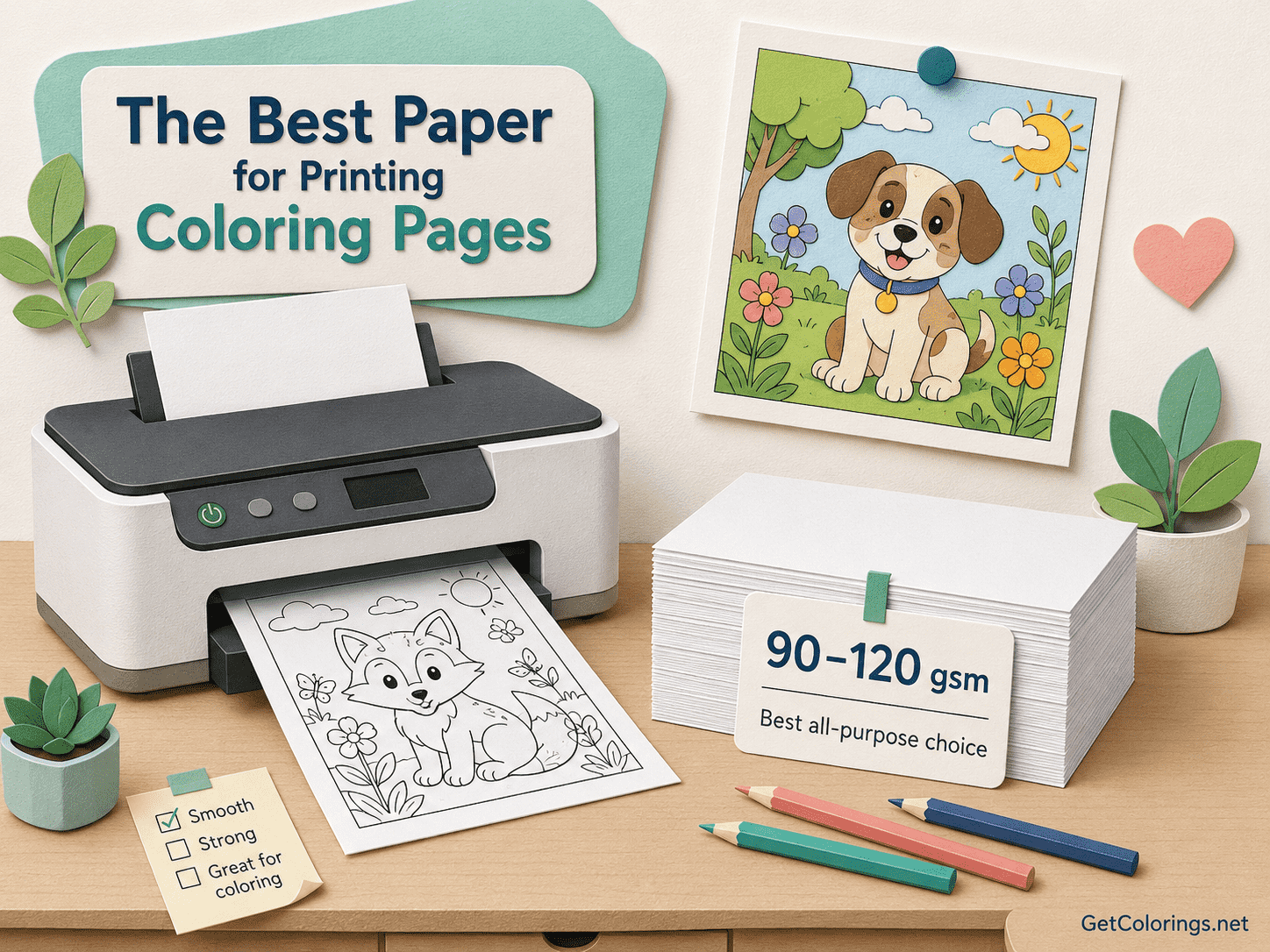
Paper in the 90 to 120 gsm range is often the most useful for printable coloring pages.
It feels sturdier than regular printer paper but is still thin enough for most home printers. The page is less likely to wrinkle, and the finished artwork is easier to display or give as a gift.
This type of paper works well with:
- Crayons
- Colored pencils
- Gel pens
- Many washable markers
- Detailed coloring pages
- Classroom displays
- Homemade coloring books
If you want a paper that works for most family coloring activities, try a smooth white sheet around 100-120 gsm.
Before you buy a big pack, check your printer’s recommended maximum paper weight. Some printers work better with thicker paper if you load it through the rear or use a manual tray.
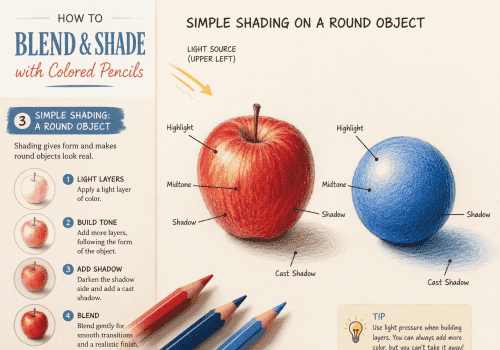
Paper quality also changes how coloring materials work. Crayons give a soft, textured look, colored pencils offer more control, and markers make colors bolder. You can read more in Crayons vs. Colored Pencils vs. Markers.
Use Heavier Paper for Markers and Craft Projects
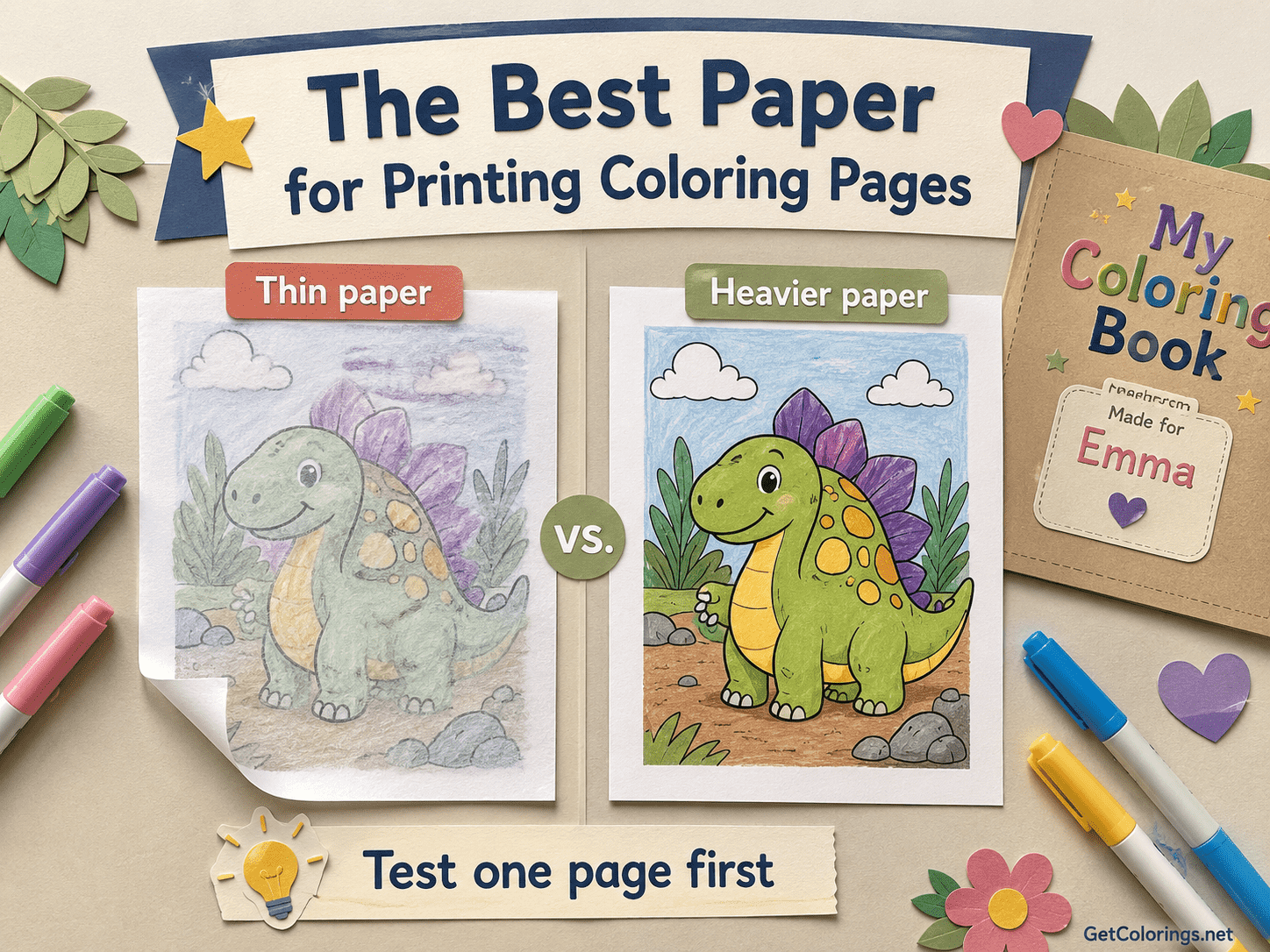
Markers have more moisture than crayons or pencils, so they usually work better on heavier paper.
Paper that’s about 140-160 gsm can help prevent wrinkling and may keep ink from soaking through. Still, even thick paper might not stop alcohol-based or very wet markers from bleeding.
If you’re using markers, always test a small spot first.
Heavier paper is also useful when the finished page will become:
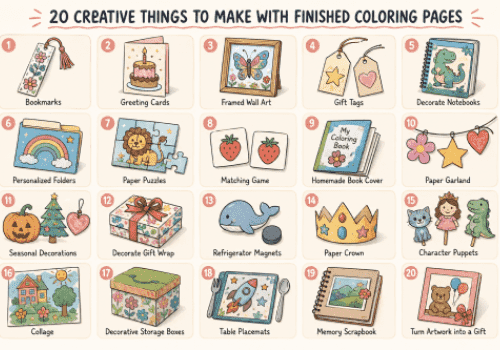
- A greeting card
- A bookmark
- A wall decoration
- A mask
- A gift tag
- A craft project
- The cover of a homemade coloring book
Cardstock usually ranges from 160 to 250 gsm. It’s sturdy and great for covers, but it can be too thick for some printers. Check your printer manual before using it.
A personalized book can use regular or medium-weight paper for the inside pages and cardstock for the front and back covers. See Turn Your Ideas into a Personalized Coloring Book for a simple printing and binding process.
Should you use smooth or textured paper?
Most printable coloring pages look best when you use smooth paper.
Smooth paper keeps outlines sharp and lets pencils or markers glide easily. It’s a practical choice for kids practicing control or coloring detailed areas.
Textured paper has a more visible grain. It can look nice with crayons and colored pencils, but it might make small details harder to color evenly.
Smooth paper is usually easier for younger kids. Use it with simple designs that have big open spaces and thick outlines. Our guide on How to Choose the Right Coloring Pages for Your Child’s Age explains how to match the picture’s complexity to your child’s age.
Kids learning to follow outlines may find it easier if the page doesn’t slide. Lightly tape the corners to the table or use a non-slip mat. You’ll find more relaxed practice ideas in How to Teach a Child to Color Inside the Lines Without Pressure.
Should you use bright white or cream paper?
Bright white paper makes coloring pages look clean and gives strong contrast with black outlines. It’s the easiest choice for most printable designs.
Cream or off-white paper gives finished pictures a warmer feel. It works well for nature, vintage, or seasonal designs, but pale colors might not look as bright as they do on white paper.
For educational pages with letters, numbers, or matching, white paper is usually the clearest. Try it with activities like How to Use Coloring Pages to Teach Letters and the Alphabet or 10 Fun Ways to Teach Numbers with Coloring Pages.
Match the Paper to the Purpose
An easy way to pick paper is to think about what you’ll do with the page after printing.
Use 75-80 gsm paper for quick everyday activities and large classroom sets.
Use 90-120 gsm paper when you want a stronger page for crayons, pencils, or general home use.
Use 140-160 gsm paper for markers, special artwork, or pages that may be displayed.
Use cardstock for book covers, cards, masks, and craft projects, provided the printer supports it.
Teachers might choose regular paper for quick exercises and thicker sheets for group displays or long-term projects. You’ll find more ideas in How Teachers Can Use Printable Coloring Pages in the Classroom.
Final Thoughts
The best paper for coloring pages doesn’t have to be expensive.
Regular printer paper works for most crayon and colored-pencil activities. Slightly thicker paper is better for all-purpose use, and heavier sheets are great for markers and crafts.
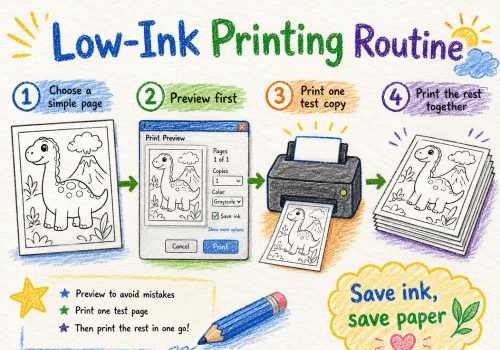
Start with the materials your child already likes to use. Check what your printer can handle, print a test page, and adjust as needed.
The right paper should make coloring easier, not turn a simple creative activity into a complicated purchase.