How to Choose the Right Coloring Pages for Your Child’s Age
Coloring is a simple, accessible creative activity for children that requires only a printable image and basic art supplies such as crayons, colored pencils, or markers. However, not all coloring pages are appropriate for every child.
Excessively detailed pages may frustrate younger children, while overly simple designs may fail to engage older children. Selecting an appropriate coloring page enhances enjoyment and supports skill development by offering an optimal level of challenge.
This guide outlines strategies for selecting age-appropriate coloring pages for toddlers, preschoolers, school-age children, and older children.
Why Age-Appropriate Coloring Pages Matter
Children’s abilities can change quickly as they grow. A two-year-old may enjoy making large marks across a simple picture, while an eight-year-old may prefer detailed animals, characters, vehicles, or patterned designs.
The right coloring page should offer a small challenge without making the child feel overwhelmed. Age-appropriate pages can help children practice:
- Holding and controlling crayons or pencils
- Recognizing colors, objects, letters, and numbers
- Paying attention to shapes and boundaries
- Making independent creative choices
- Completing a simple activity from beginning to end
The objective is not to achieve perfect coloring. Children benefit from opportunities to experiment, select unconventional colors, and color beyond the outlines. The coloring page serves as a creative tool rather than an evaluative measure.
Coloring Pages for Ages 1-2
Children between one and two years old are usually at the beginning of their coloring experience. At this age, they may hold a crayon with their whole hand and make random lines, dots, or circles.
They are not expected to color inside the lines. The main purpose is to explore the crayon's movement and observe how marks appear on paper.
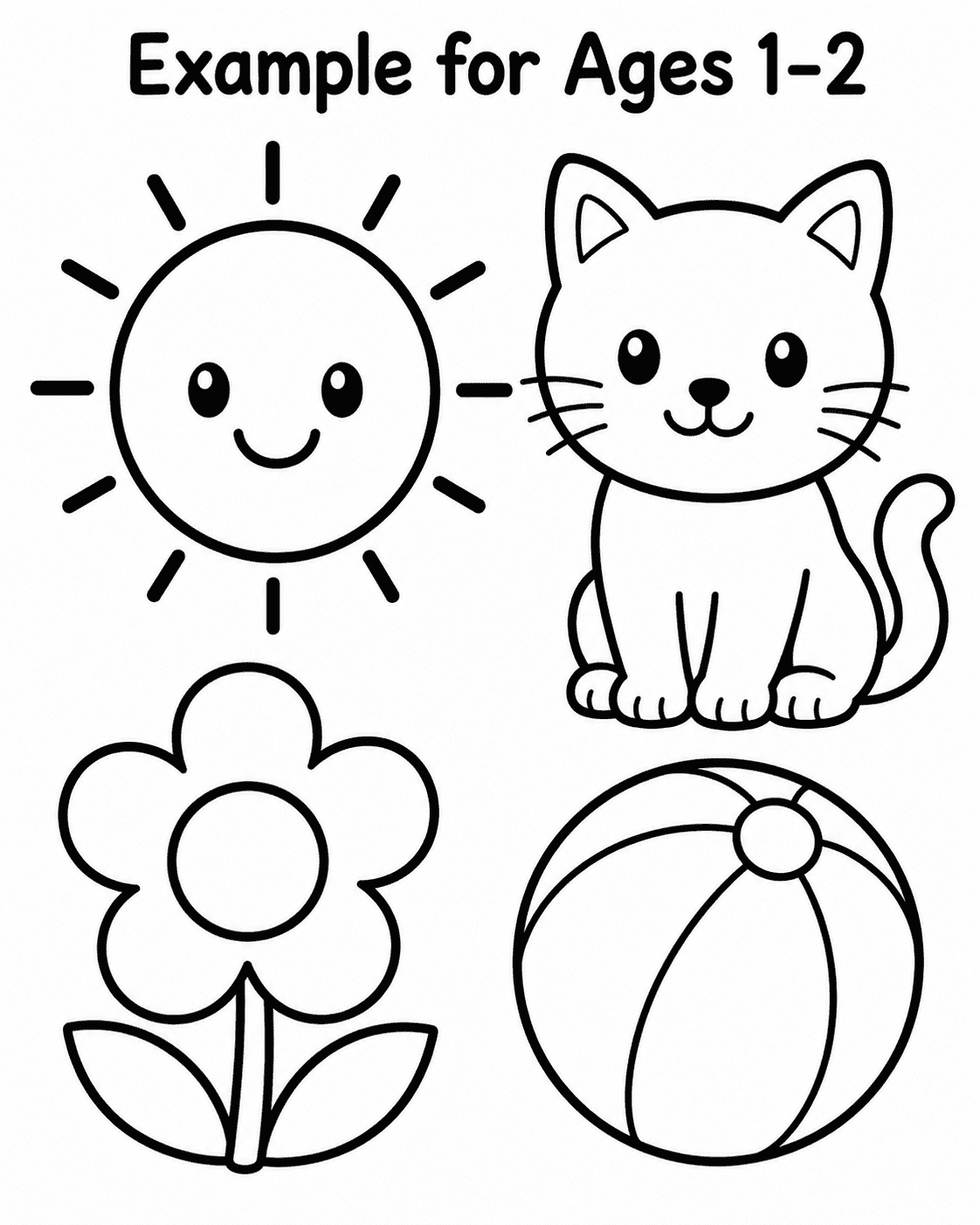
Choose pages with:
- One large object
- Very thick outlines
- Large open spaces
- Simple and familiar shapes
- Minimal background detail
Good subjects for this age include:
- A ball
- A large flower
- A sun
- A smiling face
- A simple car
- A cat or a dog
- Basic fruits
Avoid pictures with many small sections, narrow spaces, complicated patterns, or crowded backgrounds.
Large crayons designed for small hands are often easier for young children to grip. Washable art materials are recommended, as younger children may mark surfaces beyond the paper.
Adult supervision is important, especially when using small art supplies.
Coloring Pages for Ages 3-4
Preschool children often demonstrate increased control over their crayons. They may attempt to follow outlines, recognize familiar objects, and use different colors for distinct parts of a picture.
At this stage, children typically prefer coloring pages that feature familiar objects or scenes from daily life.
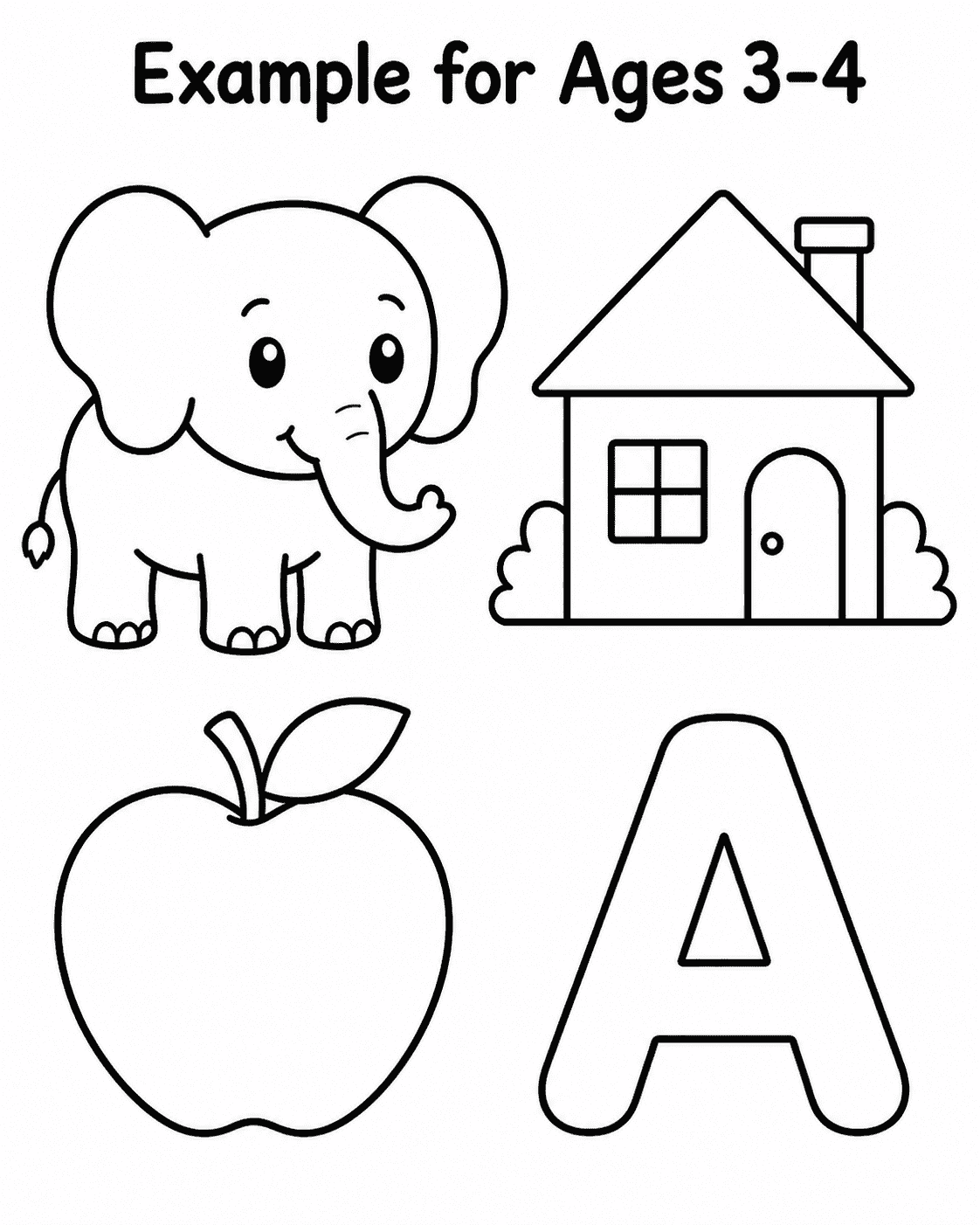
Choose pages with:
- Bold and clear outlines
- Large coloring areas
- Two or three main objects
- Limited background details
- Familiar and easily recognized subjects
Suitable themes include:
- Farm animals
- Dinosaurs
- Cars and trucks
- Flowers and trees
- Simple houses
- Family members
- Weather
- Food
- Basic shapes
- Alphabet letters
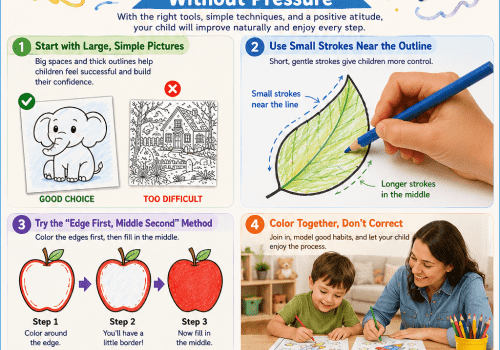
For example, instead of selecting a complex jungle scene with numerous animals, choose a page with a single large elephant or two simple jungle animals.
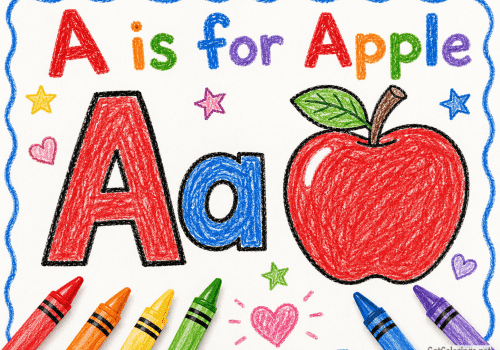
Children aged three to four may also enjoy coloring pages that introduce basic educational concepts. A page can include one large letter with a matching object, such as “A is for Apple.”
Avoid correcting every color choice. Unconventional selections, such as a purple elephant or a blue banana, reflect the child’s imagination.
Coloring Pages for Ages 5-6
Children aged five to six are often ready for pictures with more elements and smaller coloring areas. Many children at this age can spend more time on one activity and enjoy adding their own details.
Children at this age may begin to compare their work with original images or with the coloring completed by others. Emphasize effort and creativity rather than perfection.
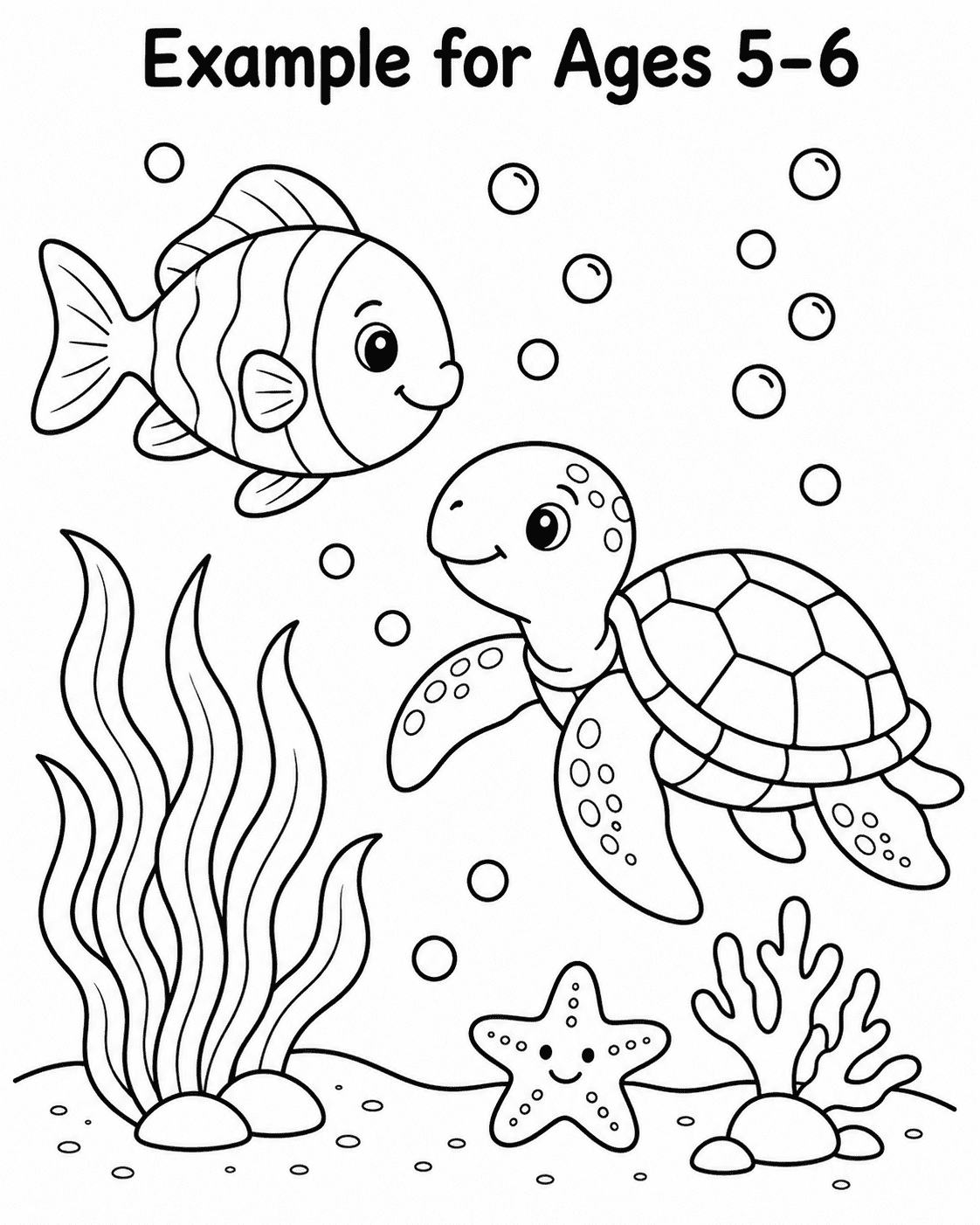
Choose pages with:
- Medium-sized coloring spaces
- Clear but slightly thinner outlines
- Simple backgrounds
- Several objects in one scene
- Educational or story-based themes
Good options include:
- Underwater scenes
- Space and planets
- Fairy-tale settings
- Construction vehicles
- Forest animals
- Seasons and holidays
- Letters and numbers
- Simple maps
- Community helpers
- Scenes from daily life
Children in this age group may enjoy pages that combine coloring with a small task. Examples include:
- Color-by-number pages
- Alphabet coloring activities
- Counting pictures
- Find-and-color activities
- Simple matching exercises
Ensure that the task is straightforward and easy to understand. Excessive instructions may turn a relaxing coloring activity into a demanding academic exercise.
Coloring Pages for Ages 7-9
Children between seven and nine years old can usually work with more detailed designs. Their interests also become more specific. One child may love horses, while another may prefer sports, robots, fashion, nature, or fantasy scenes.
Permitting children to select the subject matter can increase their engagement with the activity.
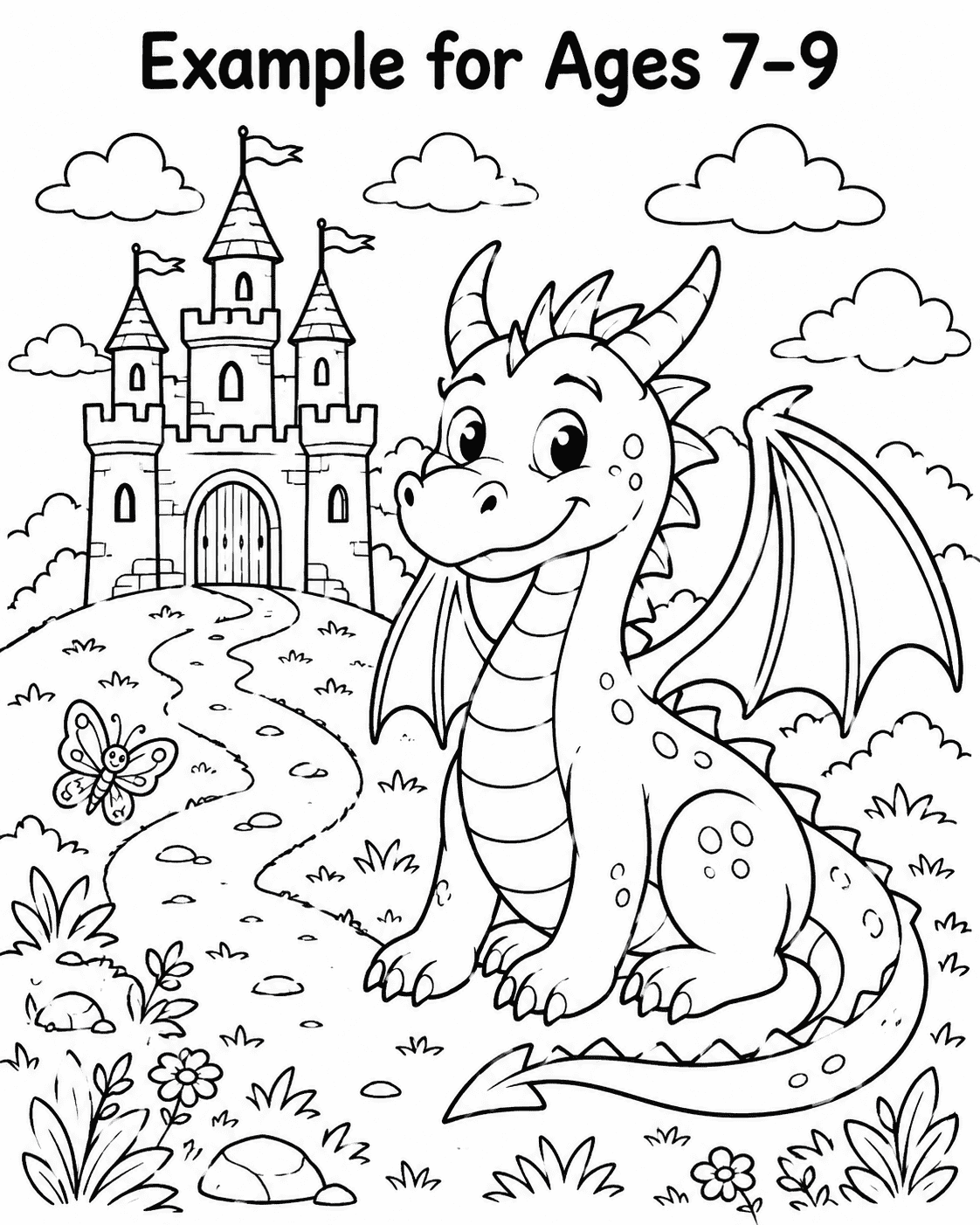
Choose pages with:
- More detailed backgrounds
- Smaller sections
- Multiple objects or characters
- Interesting patterns
- Themes connected to the child’s hobbies
Suitable categories include:
- Detailed animal pictures
- Fantasy landscapes
- Dragons and castles
- Sports scenes
- Vehicles and machinery
- Nature and wildlife
- Fashion designs
- Buildings and cities
- Science-themed pages
- Geometric patterns
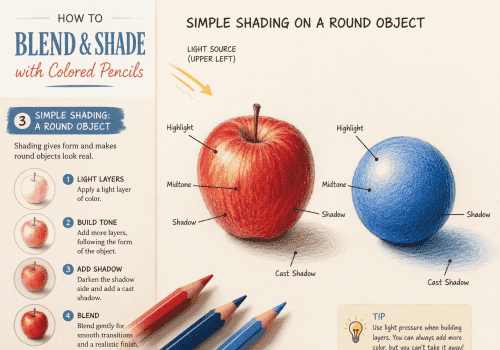
At this stage, children may begin to experiment with shading, color combinations, and blending techniques. Colored pencils generally provide greater control for coloring smaller sections.
Creativity can be encouraged by asking questions such as:
- What time of day is shown in the picture?
- Which colors would create a warm or cold feeling?
- Can you add a background or extra objects?
- Can you create a story about the completed picture?
These questions can extend a single printable page into a more sustained and creative activity.
Coloring Pages for Ages 10 and Up
Older children and preteens may still enjoy coloring, but they often prefer designs that do not feel too childish. Detailed artwork gives them more freedom to experiment with color, texture, shadows, and personal style.
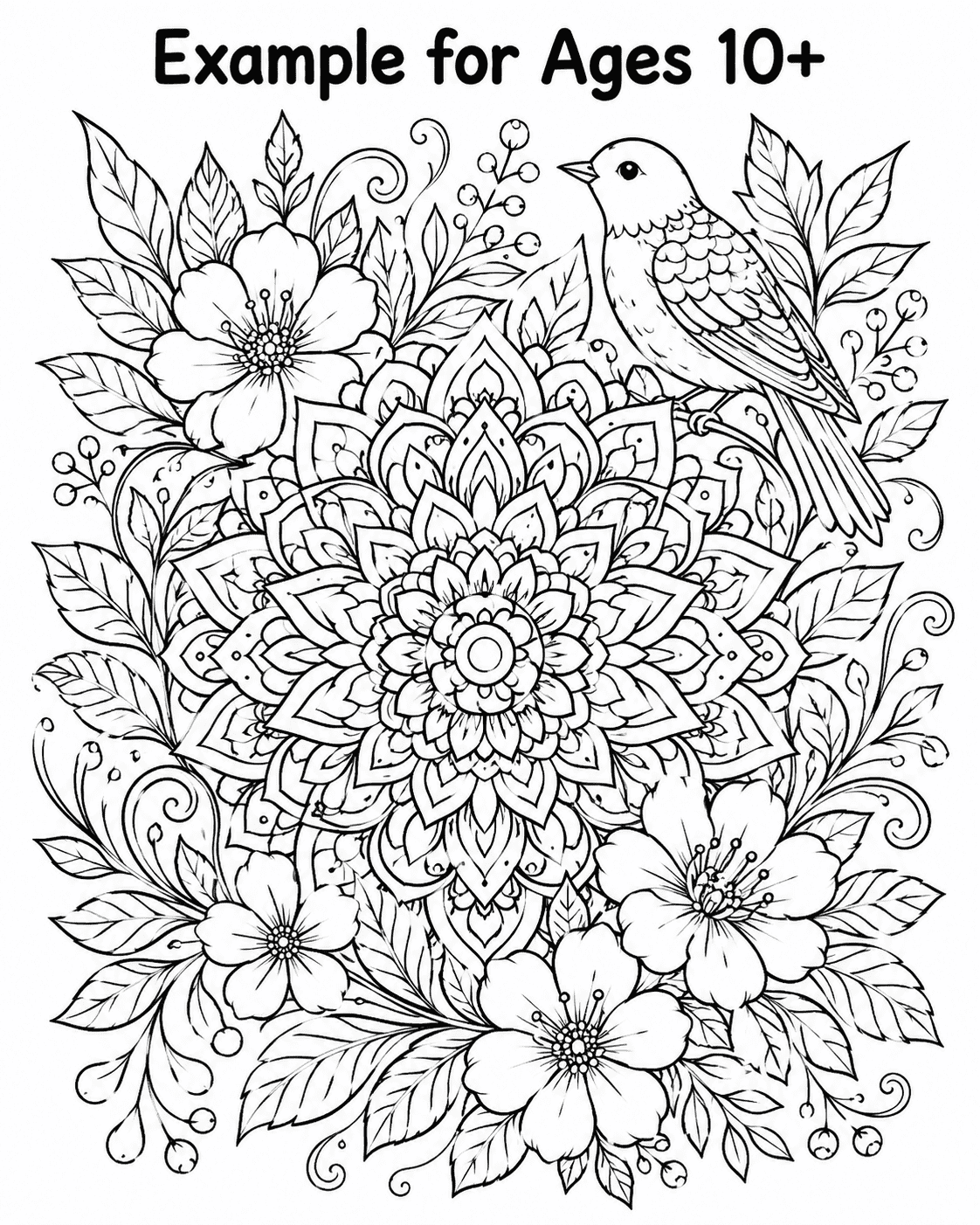
Choose pages with:
- Intricate patterns
- Detailed landscapes
- Realistic animals
- Architecture
- Fashion illustrations
- Geometric designs
- Floral artwork
- Fantasy art
- Advanced vehicles
- Decorative lettering
Some older children enjoy mandala-style patterns because these designs allow for the creation of unique color schemes. Others prefer realistic pictures that provide opportunities to practice light, shadow, and texture.
At this age, children can use:
- Colored pencils
- Fine-tip markers
- Gel pens
- Water-based markers
- Pastel pencils
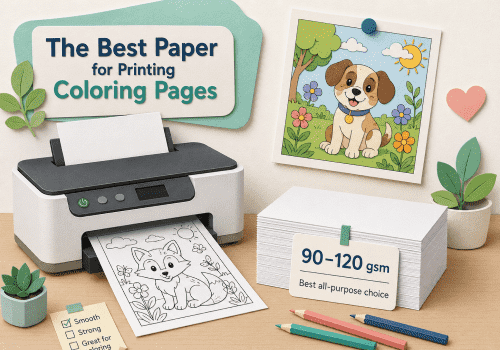
Verify that the paper is compatible with the selected art materials. Markers may bleed through standard printer paper. Placing an extra sheet underneath can protect surfaces.
Consider the Child’s Ability, Not Only Their Age
Age recommendations are helpful, but every child develops at a different pace. Some four-year-olds enjoy detailed pictures, while some eight-year-olds prefer large and simple designs.
Observe the child’s reaction to the coloring page.
The coloring page may be too difficult when the child:
- Becomes frustrated after a few minutes
- Cannot easily color the small spaces
- Frequently asks an adult to complete the picture.
- Loses interest before starting
- Says the picture is too hard
The page may be too easy for the child:
- Completes it very quickly without interest
- Asks for something more detailed
- Does not feel excited by the subject
- Wants to add many extra elements
A practical strategy is to provide three options: a simple page, a medium-difficulty page, and a more detailed page. The child can then select the page that appears most engaging.
Offering choices is often more beneficial than determining the exact difficulty level.
Match the Coloring Page to the Child’s Interests
Even an age-appropriate page may not be enjoyable if the child does not like the subject.
Before printing, inquire about the child’s preferences regarding what to color. Their interests may include:
- Animals
- Cars
- Trains
- Dinosaurs
- Space
- Flowers
- Sports
- Fairy tales
- Food
- Nature
- Buildings
- Ocean life
A child with a strong interest in dinosaurs may spend significantly more time coloring a dinosaur page than a randomly selected picture.
The coloring page can also be connected to a recent experience. After visiting a zoo, animal coloring pages may be appropriate. Before a trip to the beach, select fish, boats, or sea animals. During autumn, choose leaves, pumpkins, and seasonal scenes.
This approach personalizes the activity and increases its significance for the child.
Choose the Right Amount of Detail
The amount of detail is one of the easiest ways to judge whether a coloring page is suitable.
Simple pages
Simple pages contain one main object, thick lines, and large open areas. They are usually best for toddlers and younger preschoolers.
Medium-detail pages
These pages contain several objects, some background elements, and medium-sized coloring areas. They are suitable for many preschool and early school-age children.
Detailed pages
Detailed pages may contain patterns, realistic textures, crowded scenes, or many small areas. They are usually better for older children who have more patience and control.
Before printing, examine the smallest sections of the image and assess whether the child’s crayon or pencil can be used effectively in those spaces.
Select the Right Art Materials
The coloring page and the art material should work well together.
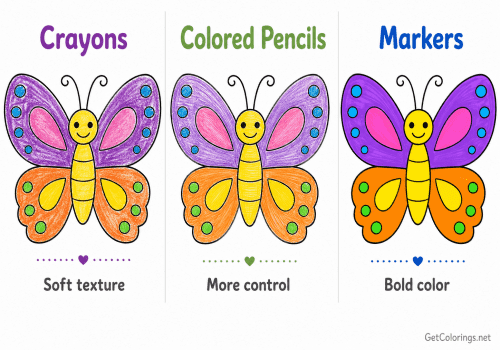
Crayons
Crayons are suitable for younger children because they are easy to use and do not require sharpening. Large crayons are often easier for small hands to hold.
Colored pencils
Colored pencils work well for children who want more control and detail. They are especially useful for shading and working inside smaller spaces.
Markers
Markers create strong, bright colors but may bleed through thin paper. They are better for children who understand how to use them carefully.
Gel pens
Gel pens are useful for small decorative details and patterned coloring pages. They may not be suitable for very young children. For younger children, avoid art materials with small removable parts unless direct adult supervision is provided.
Common Mistakes Parents Can Avoid
Choosing pages based only on age
Two children of the same age may have very different interests and abilities. Use age as a starting point, not a strict rule.
Expecting perfect results
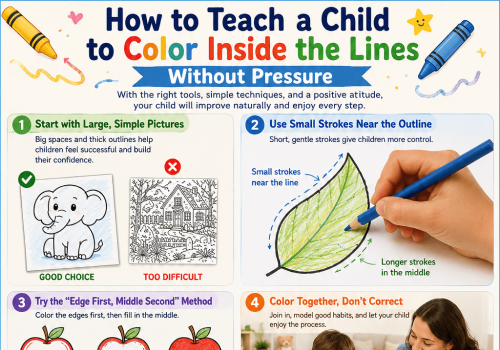
Coloring outside the lines is normal, especially for younger children. Focus on enjoyment and participation.
Giving too many pages at once
Providing a large number of coloring pages may overwhelm the child. Start with two or three thoughtfully chosen options.
Correcting unusual color choices
Children may not always prefer realistic color choices. Encourage creativity unless the activity is designed to teach real-world color associations.
Selecting pictures with too much detail
An overly complex page may discourage a child from starting the activity. When uncertain, select the simpler option.
Turning every activity into a lesson
Educational coloring pages are valuable, but children also require opportunities to color for enjoyment without instructional objectives.
A Quick Checklist Before Printing
Before downloading or printing a coloring page, ask:
- Is the subject interesting to the child?
- Are the coloring spaces large enough?
- Is the picture too simple or too detailed?
- Can the child understand what is shown?
- Does the page match the available crayons, pencils, or markers?
- Will the child be able to complete at least part of it independently?
- Is the image clear and suitable for printing?
If most responses are affirmative, the coloring page is likely an appropriate selection.
Frequently Asked Questions
What are the best coloring pages for toddlers?
Toddlers usually do best with one large object, thick outlines, and plenty of open space. Simple animals, fruits, balls, flowers, and basic shapes are good starting subjects.
At what age can children start using coloring pages?
Children can begin experimenting with crayons and paper when they can hold the materials safely and use them with adult supervision. Early coloring may look like random marks rather than completed pictures, which is completely normal.
Should children always color inside the lines?
No. Coloring inside the lines is not necessary for enjoying the activity. Younger children should be allowed to explore freely without pressure.
How many coloring pages should I offer?
Two or three choices are usually enough. Offering a small selection allows the child to choose without feeling overwhelmed.
Are detailed coloring pages suitable for all older children?
Not necessarily. Some older children still prefer simple designs. Interest and comfort level are more important than age alone.
What should I do when my child becomes frustrated?
Offer a simpler page, use larger crayons, or color together for a few minutes. The child can also leave the picture unfinished and return to it later.
Final Thoughts
Selecting an appropriate coloring page requires aligning the image with the child’s current abilities, interests, and attention span rather than strictly adhering to age guidelines.
Start with clear, manageable designs and gradually introduce more detailed pages as the child’s skills develop. Prioritize opportunities for children to make independent choices and enjoy the creative process.
An effective coloring page should inspire curiosity and motivation to participate, rather than concern about achieving perfection. last