10 Fun Ways to Teach Numbers with Coloring Pages
Numbers can seem confusing to young children. They might see the number “5” on a page, but it takes practice to realize it stands for five apples, five stars, or five crayons.
Coloring pages help by linking numbers to pictures, movement, and color. Rather than just repeating number names, children can count objects, follow easy steps, compare groups, and make something they like.
You don’t need a formal math lesson for this. With some crayons and a good printable page, number practice can become relaxed and creative play.
Pick pictures with lots of white space and clear outlines, especially for preschoolers. Our guide on How to Choose the Right Coloring Pages for Your Child’s Age shows how to match the page to your child’s skills.
Here are ten easy ways to practice numbers with coloring.
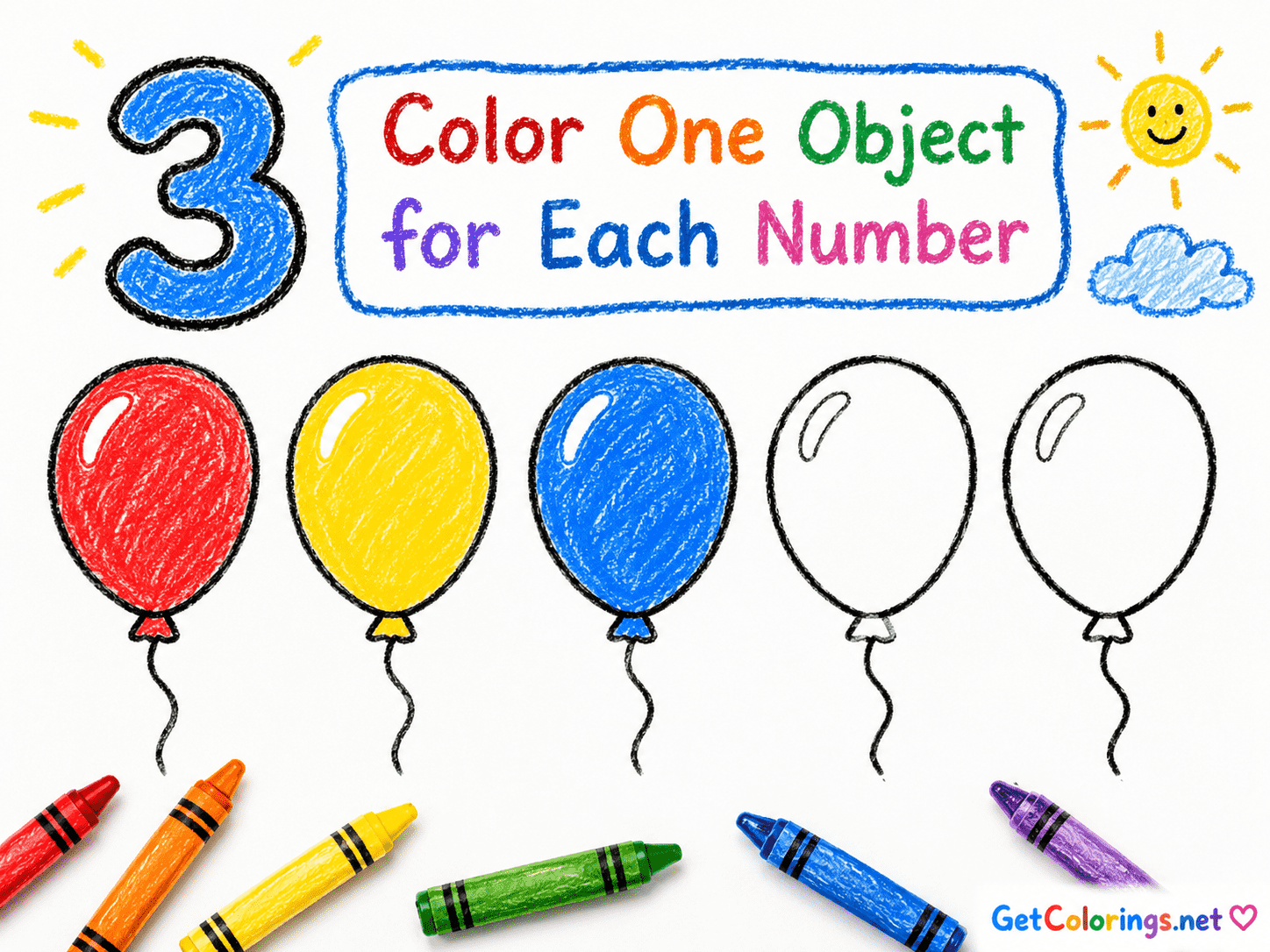
1. Color one object for each number
Start with a page containing several separate objects, such as balloons, flowers, fish, or stars.
Show the child a number and ask them to color that many objects. For example:
“Can you color three balloons?”
After coloring, count the objects together by pointing to each one. This helps your child link the written number to a real amount.
Start with numbers one to five before trying bigger groups.
2. Use classic color-by-number pages
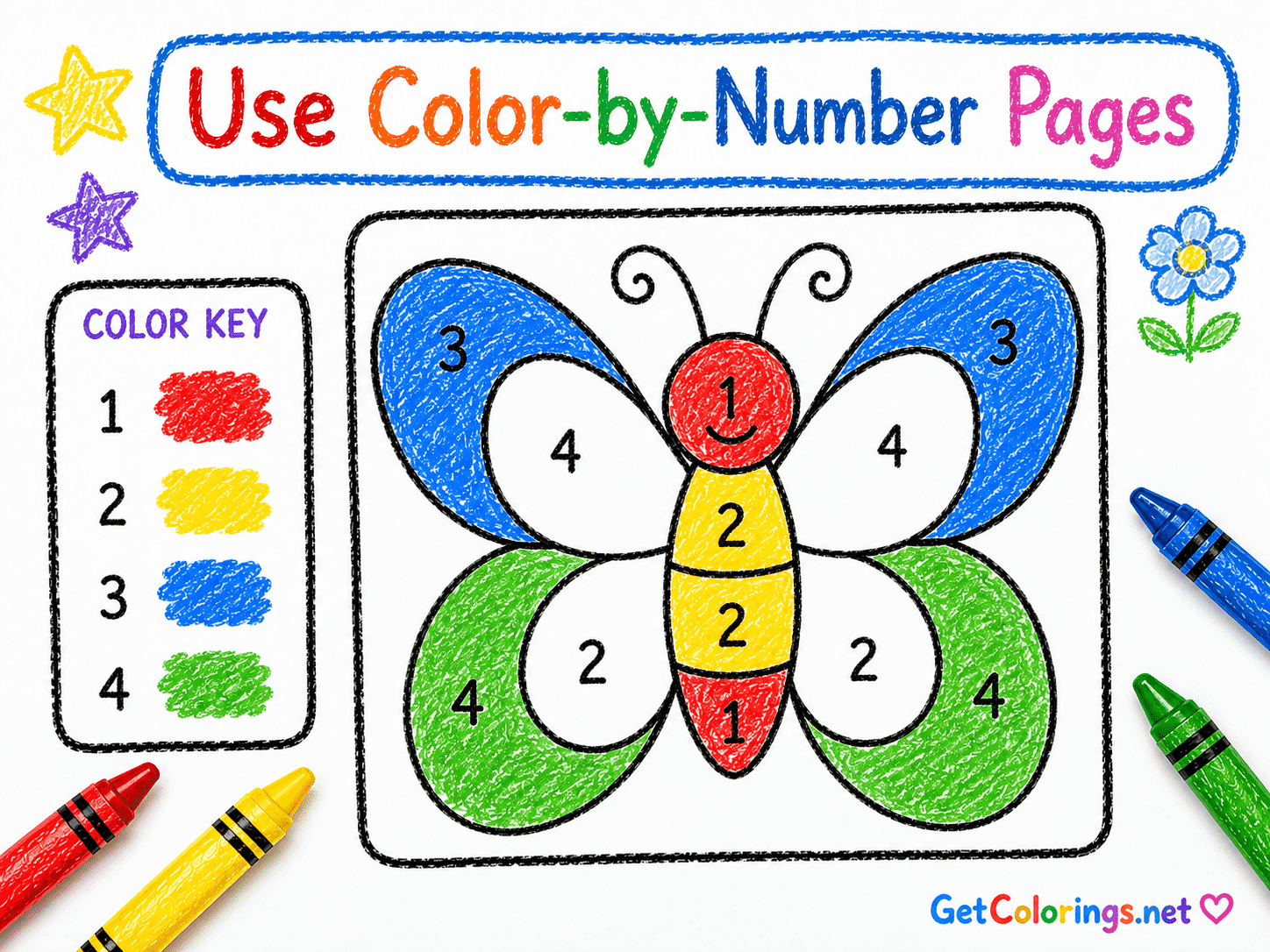
Color-by-number pages combine number recognition with the ability to follow instructions.
Each number is matched with a color. For example, areas marked “1” may be yellow, while areas marked “2” may be blue.
Before your child starts, look at the color key together. Ask them to find one number at a time instead of finishing the whole picture right away.
Younger kids usually do better with just three or four numbers and big coloring spaces. Older kids might like pages with more colors and smaller sections.
Colored pencils often work best for detailed number pages, while crayons are easier for beginners. The article Crayons vs. Colored Pencils vs. Markers can help you choose the most suitable materials.
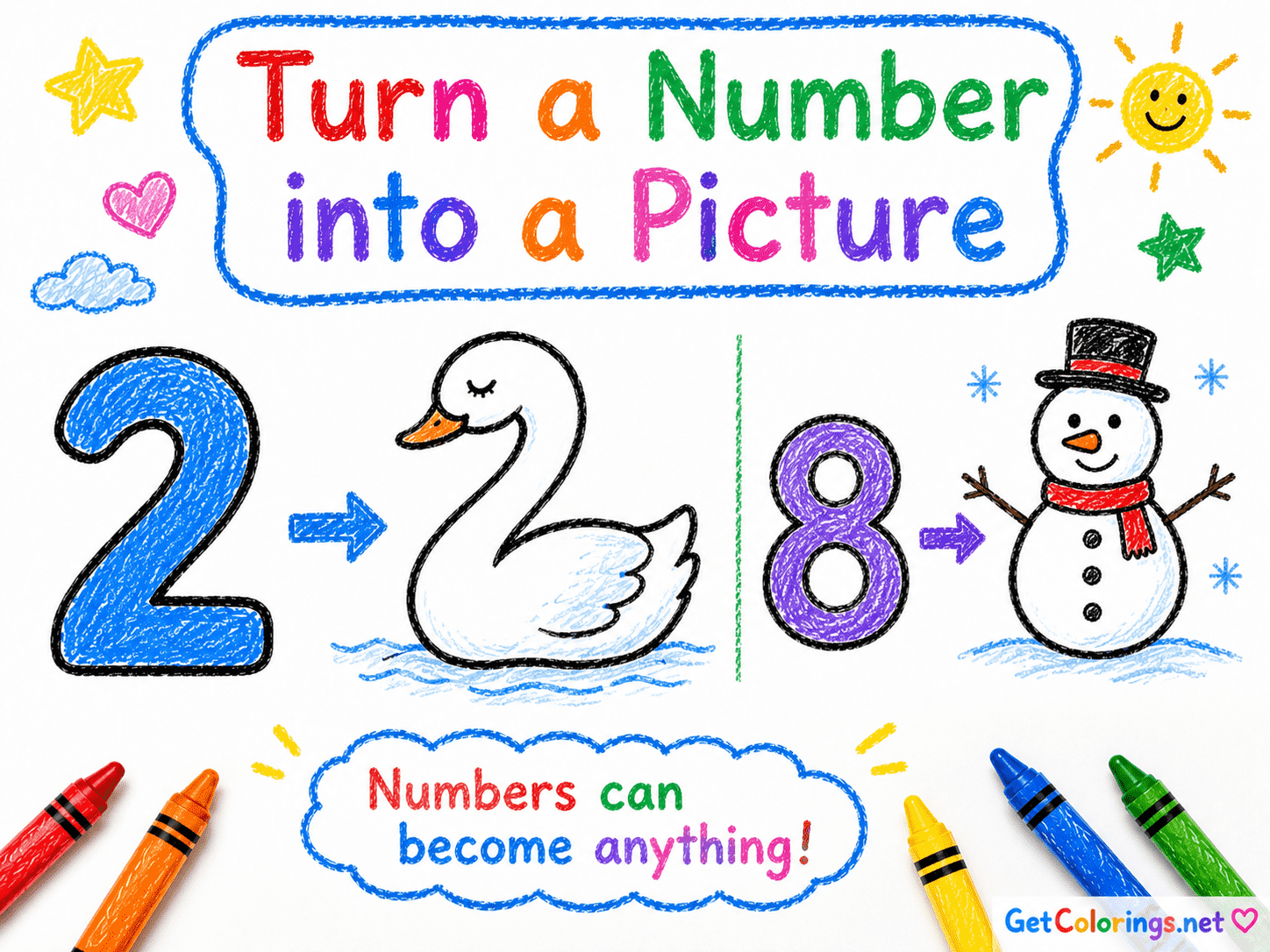
3. Turn a number into a picture
Print or draw a large number in the center of the page, then ask the child to transform it into something else.
A number 1 might become a candle. A number 2 can become a swan. A number 3 may turn into a butterfly wing, while a number 8 can become a snowman.
The child can first color the number, then add eyes, arms, patterns, or a background.
This activity helps kids remember each number’s shape and gives them a chance to use their imagination.
4. Count and color matching groups
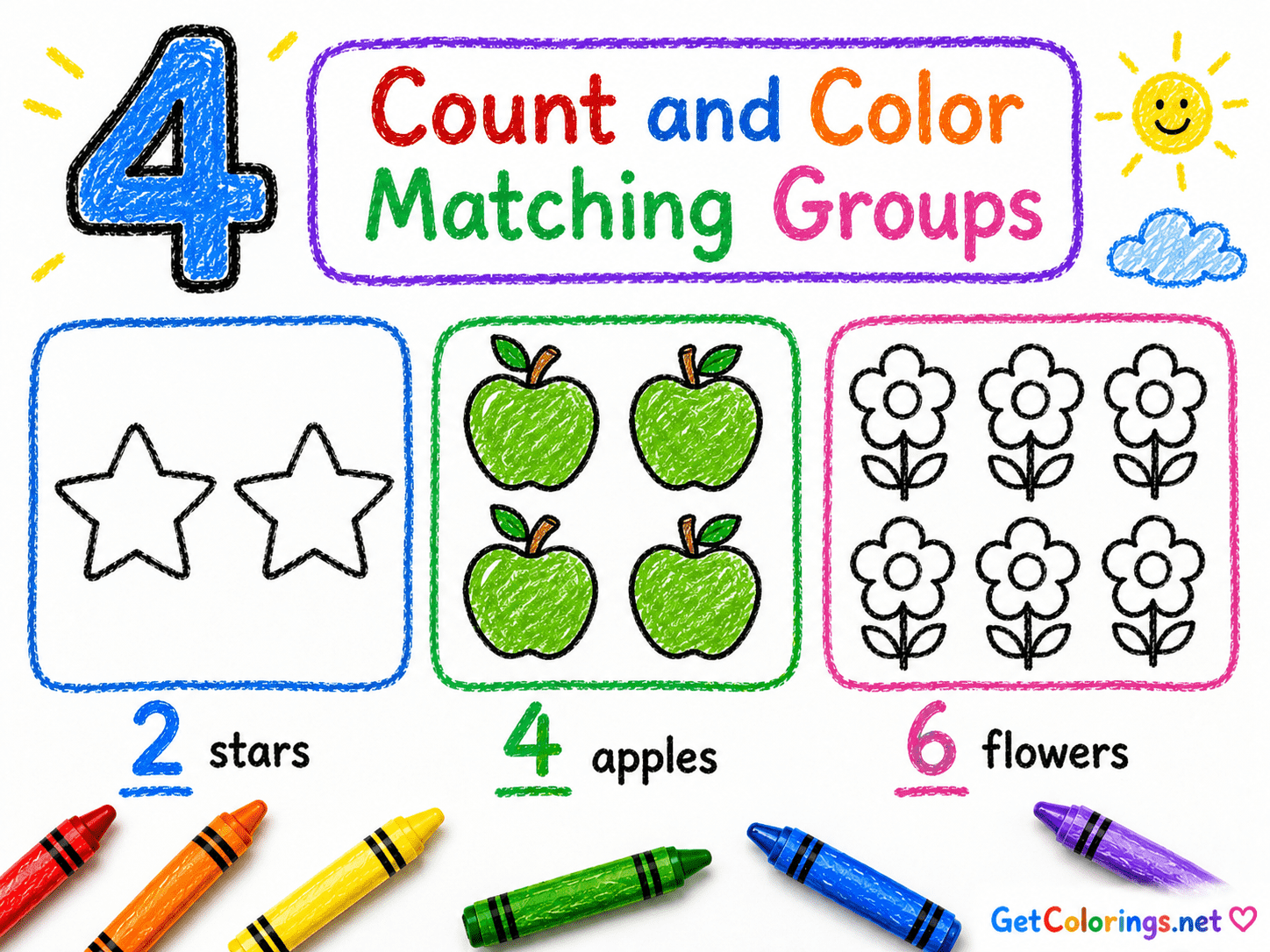
Prepare a page with several groups of objects. One group might contain two stars, another four apples, and another six flowers.
Write a number beside each group and ask the child to color only the group that matches it.
For example:
“Find the group with four objects and color it green.”
This helps kids count carefully instead of just guessing by looking at the group’s size.
5. Practice number order with a coloring path
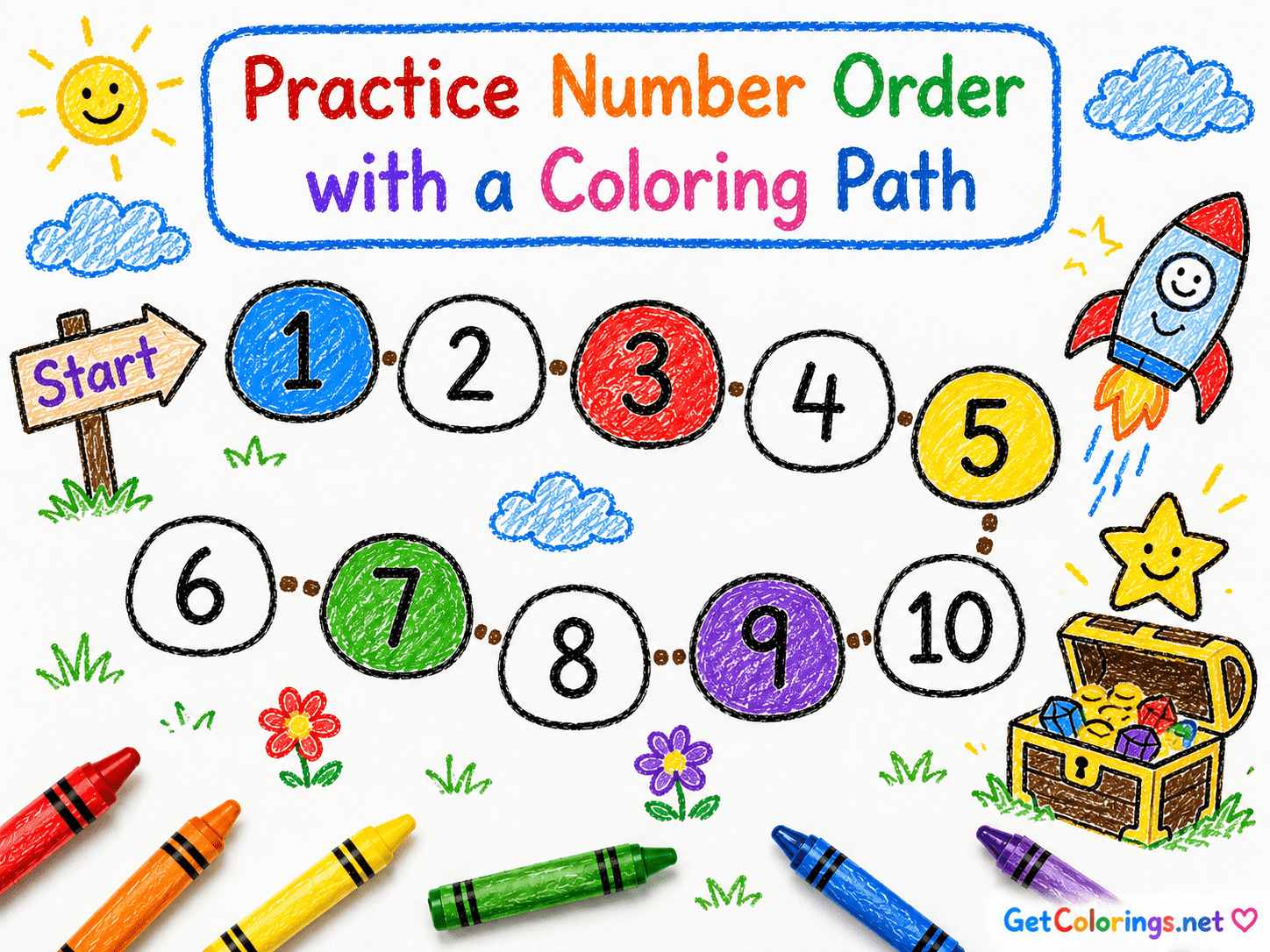
Create a simple path made from numbered circles, stones, stars, or stepping blocks.
Ask your child to color the numbers in order, starting with 1. Each number they finish moves them along the path toward a castle, treasure box, animal, or rocket.
For a greater challenge, leave out a few numbers and ask the child to write the missing ones before coloring.
You can also do this activity backward to practice counting down.
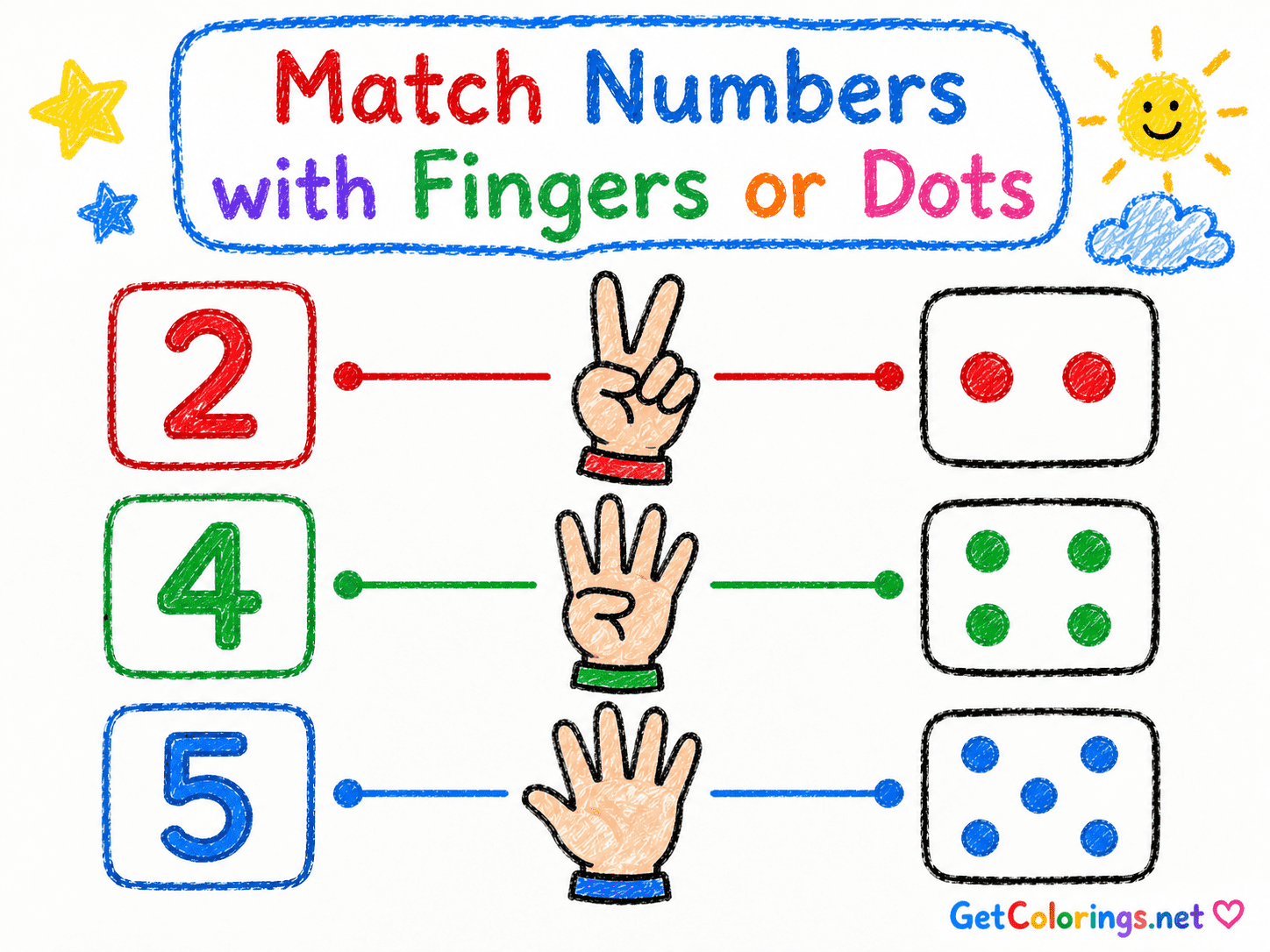
6. Match numbers with finger patterns or dots
On one side of the page, print written numbers. On the other side, add hands showing fingers, dice faces, or groups of dots.
Ask the child to color-match pairs with the same color.
For example, the number 4 and a group of four dots might both be colored orange.
This shows kids that the same amount can look different. It also helps them get ready to spot dice patterns and simple visual math.
7. Create a number hunt
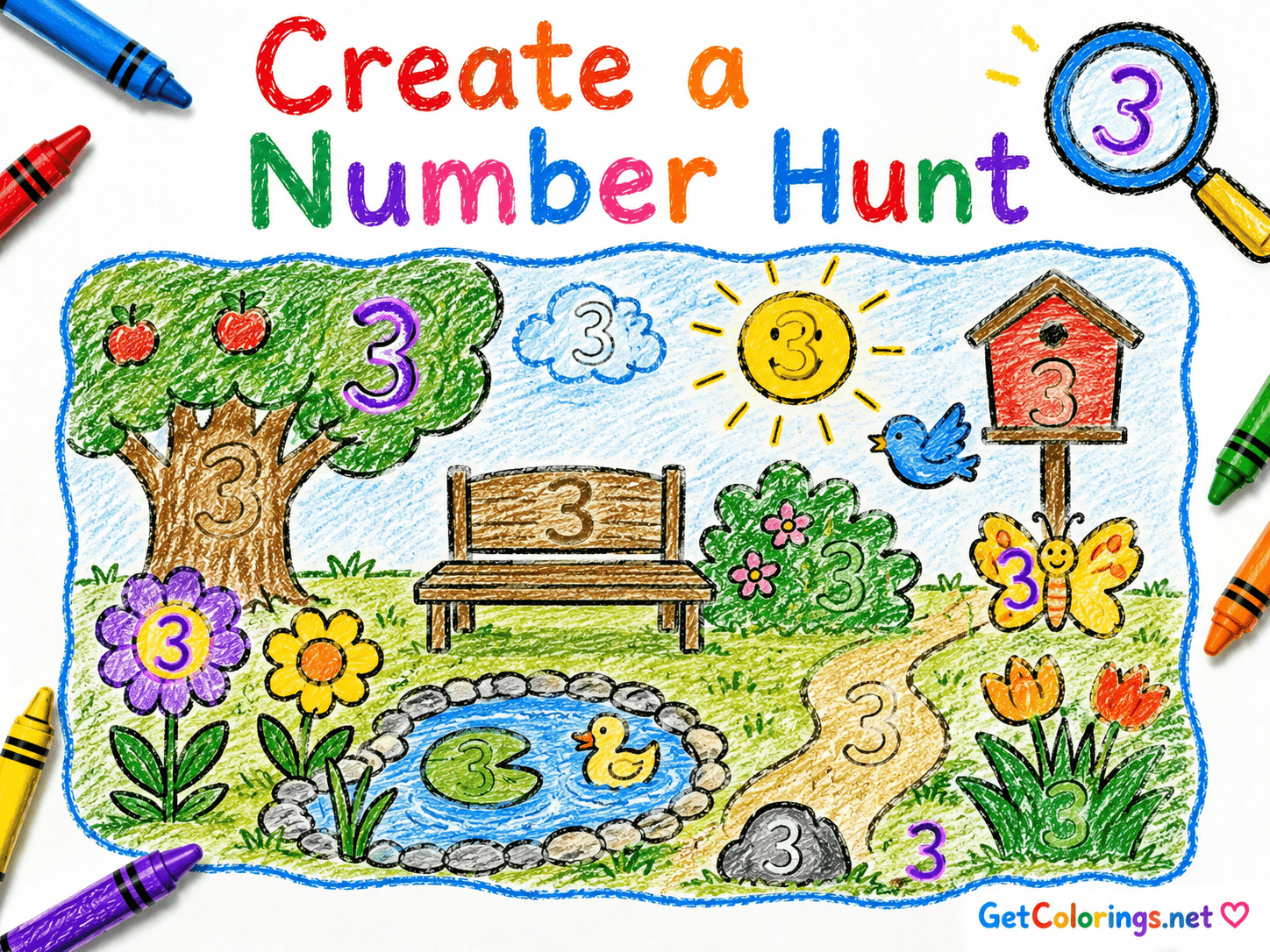
Use a coloring page with several numbers hidden inside the design.
Ask the child to find and color all examples of one number. For instance:
“Find every number 3 and color it purple.”
Then choose another color for a different number.
Keep the numbers large and easy to identify for younger children. Older children may enjoy numbers hidden inside a busier picture.
This activity builds both visual attention and number recognition. For more ideas on what kids learn while coloring, see What Skills Can Children Practice Through Coloring? A Parent’s Guide.
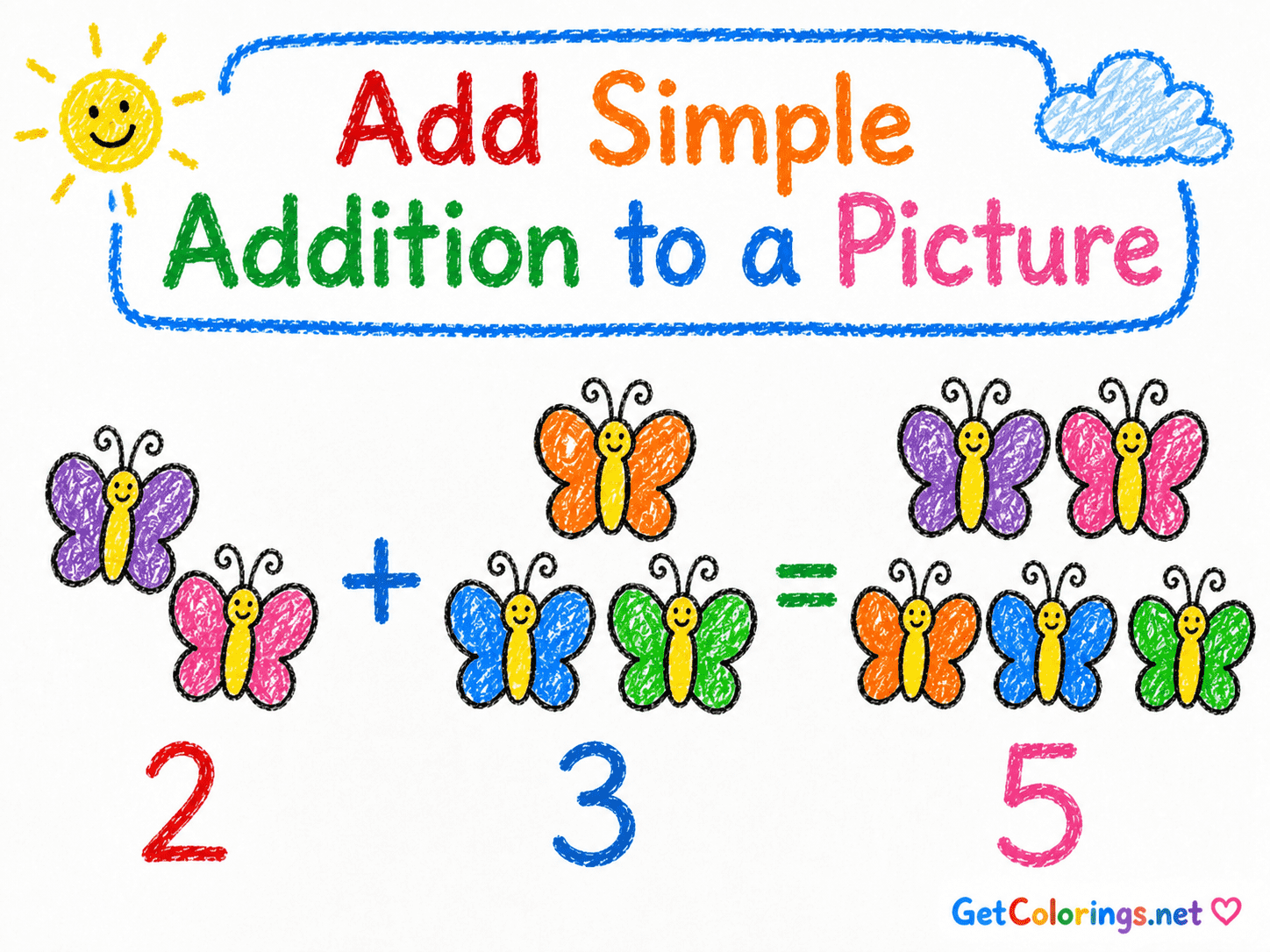
8. Add simple addition to a picture
Coloring pages can introduce basic addition without using a long worksheet.
A page might show two butterflies on one side and three butterflies on the other. Ask:
“How many butterflies are there altogether?”
After counting, the child can color all five.
Start with familiar objects and small numbers. Kids should be able to count each item one by one before trying to solve the problem in their heads.
The goal is to show what addition means: two objects plus three more make a group of five.
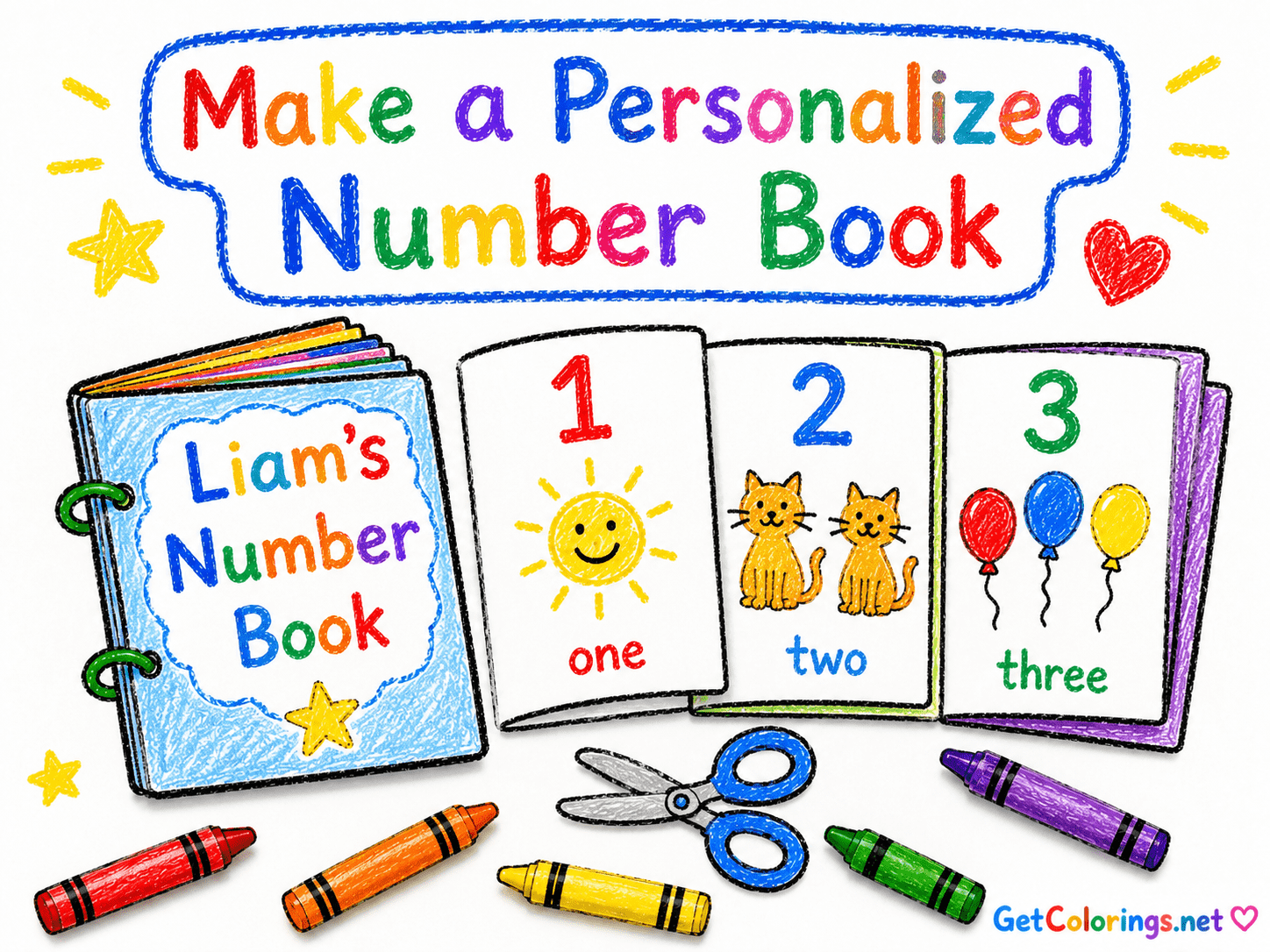
9. Make a personalized number book
Create a small homemade book with one number on each page.
For number 1, include one sun. For number 2, add two cats. Continue with three cars, four flowers, five stars, and so on.
Let your child color each page and add their own drawings. You can also write a simple sentence under the picture:
“I can see four flowers.”
Put your child’s name on the cover to make it feel special. Our guide on How to Make a Personalized Coloring Book at Home explains how to pick pages, print them, and put the book together.
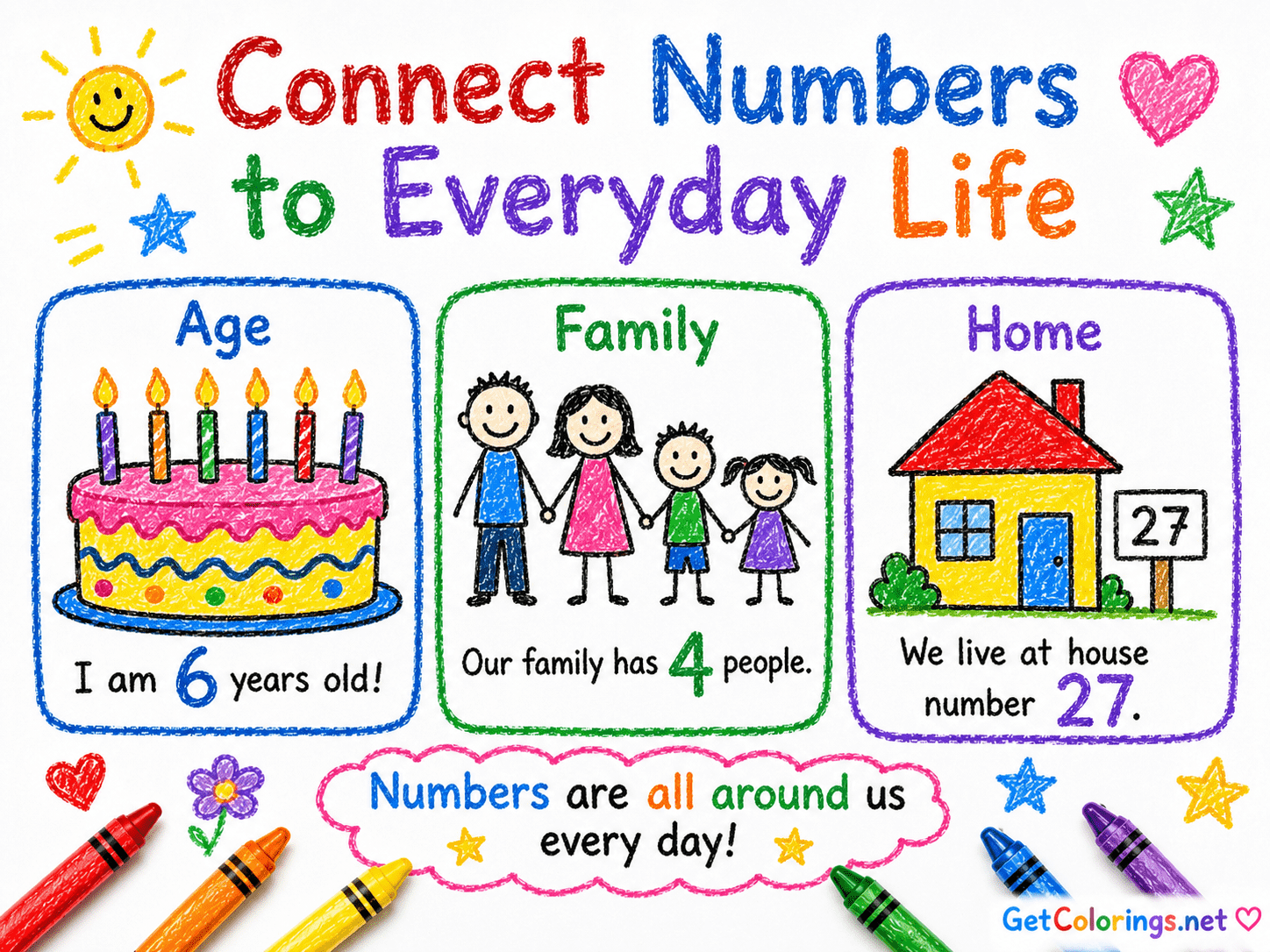
10. Connect numbers to the child’s everyday life
Numbers are easier to understand when they connect to something familiar.
Create or choose coloring pages connected to:
- The child’s age
- The number of people in the family
- Their house or apartment number
- A birthday date
- The number of pets they have
- Their favorite sports jersey
- The number of wheels on a vehicle
A birthday page might show six candles for a six-year-old. A family page could contain four people if there are four family members.
Ask your child to color the picture and tell you what the number means. When the activity feels personal, it’s often more memorable.
Keep Number Coloring Relaxed
Kids learn at their own pace. Some might spot written numbers quickly but need more time to understand amounts. Others may count objects well but mix up the shapes of 6 and 9.
Try not to correct every mistake right away. Count together, point to each object, and let your child have time to try again.
If coloring gets tricky, pick pages with bigger spaces or use thicker crayons. The tips in How to Teach a Child to Color Inside the Lines Without Pressure can help keep things positive. For math centers, early-finisher tasks, and listening exercises, see How Teachers Can Use Printable Coloring Pages in the Classroom for more classroom suggestions.
Final Thoughts
Coloring pages don’t replace everyday counting, hands-on play, or regular math lessons, but they do make practicing numbers more fun.
Kids can color amounts, follow numbered paths, match symbols, solve simple picture problems, and make their own number books. Each activity helps numbers make sense visually, not just as symbols on a page.
Keep instructions short, start with small numbers, and let your child enjoy the creative side. When learning feels like play, kids are more likely to want to do it again.