How to Create a Screen-Free Coloring Routine for Kids
Turning off a screen is easy. Helping a child move calmly into another activity is often the difficult part.
If a tablet, TV, or phone is taken away without offering something else to do, kids might feel like they’ve just lost something fun. Coloring works best when it’s a regular part of the day, not a consequence for using screens.
The goal isn’t to have a child sit quietly and color for an hour. Instead, it’s about making a short, predictable time when screens are put away and creativity comes next.
The Routine Begins Before the Crayons Come Out
A successful screen-free activity should be easy to start.
If parents have to look for a coloring page, set up the printer, sharpen pencils, and clear the table while their child waits, the transition can quickly become frustrating.
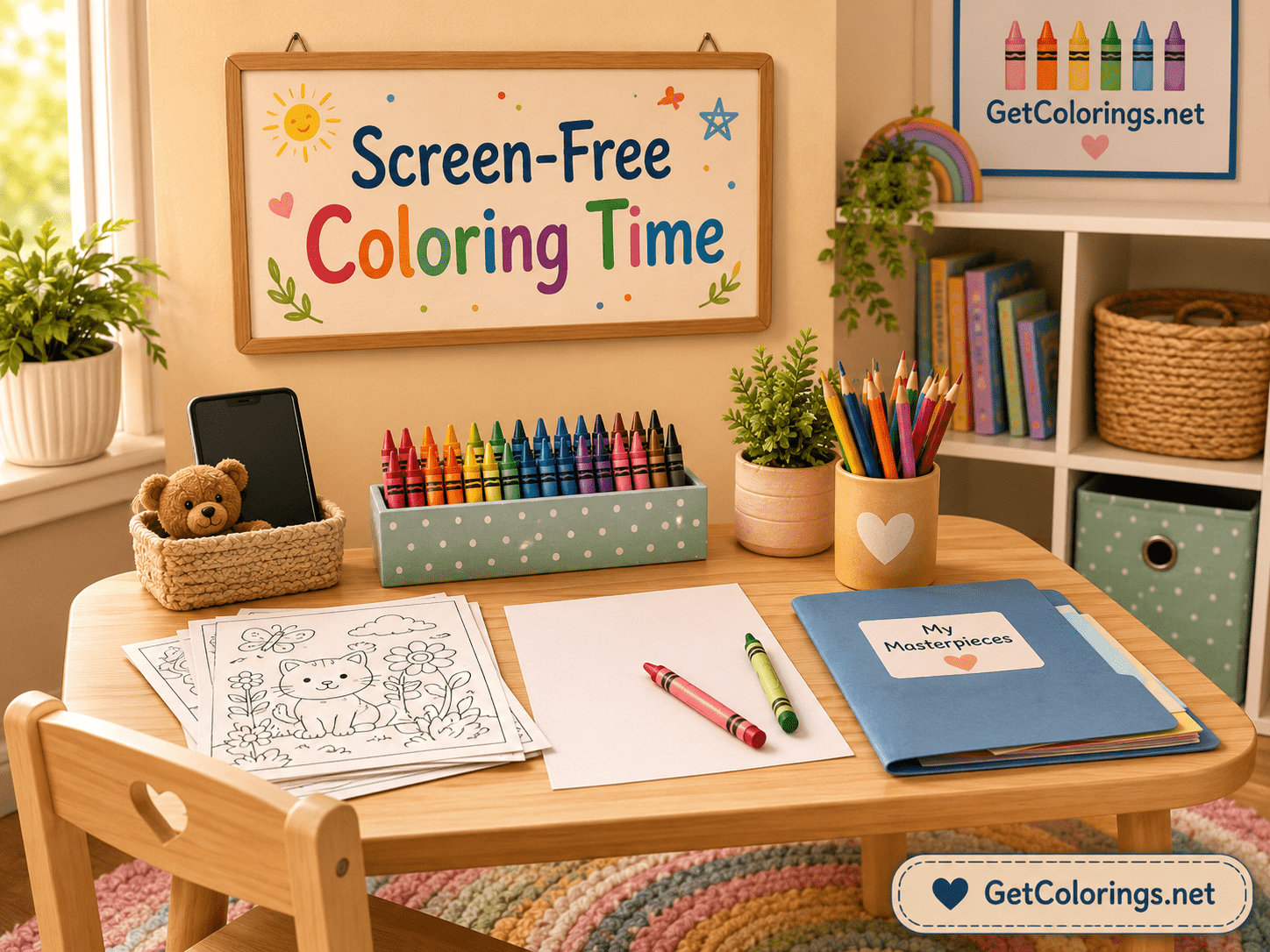
Prepare a small coloring area in advance. It can be a permanent corner, one kitchen-table drawer, or a portable box that appears at the same time each day.
Keep the setup simple:
A few crayons or colored pencils, several printed pages, blank paper, and a folder for unfinished work are enough.
Having too many supplies can make coloring harder instead of more fun. Kids might spend more time sorting through materials than actually coloring.
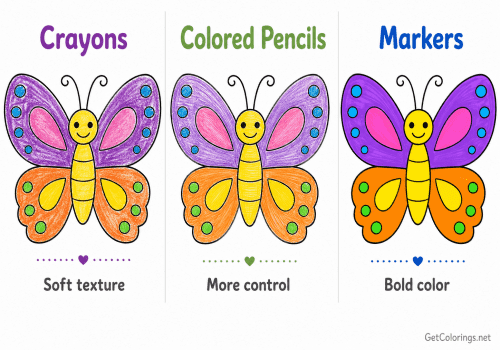
Crayons are usually the easiest for younger kids to use every day. Older kids might like colored pencils for details or markers for brighter colors. Crayons vs. Colored Pencils vs. Markers explains how each tool changes the coloring experience.
Choose a Time the Family Can Repeat
It’s more important to be consistent than to make the routine last a long time.
A ten-minute routine that happens often is better than a one-hour coloring session that only happens once.
Good moments may include:
- After breakfast
- After preschool or school
- Before dinner
- During a parent’s work break
- After bath time
- Before the bedtime routine begins
Try not to start coloring when your child is hungry, tired, or busy with something else.
The transition becomes easier when children know what to expect:
“After snack, we have coloring time.”
“First, we put the tablet away, then you choose a picture.”
This way, the routine feels expected instead of coming out of nowhere.
Use a Transition, Not a Command
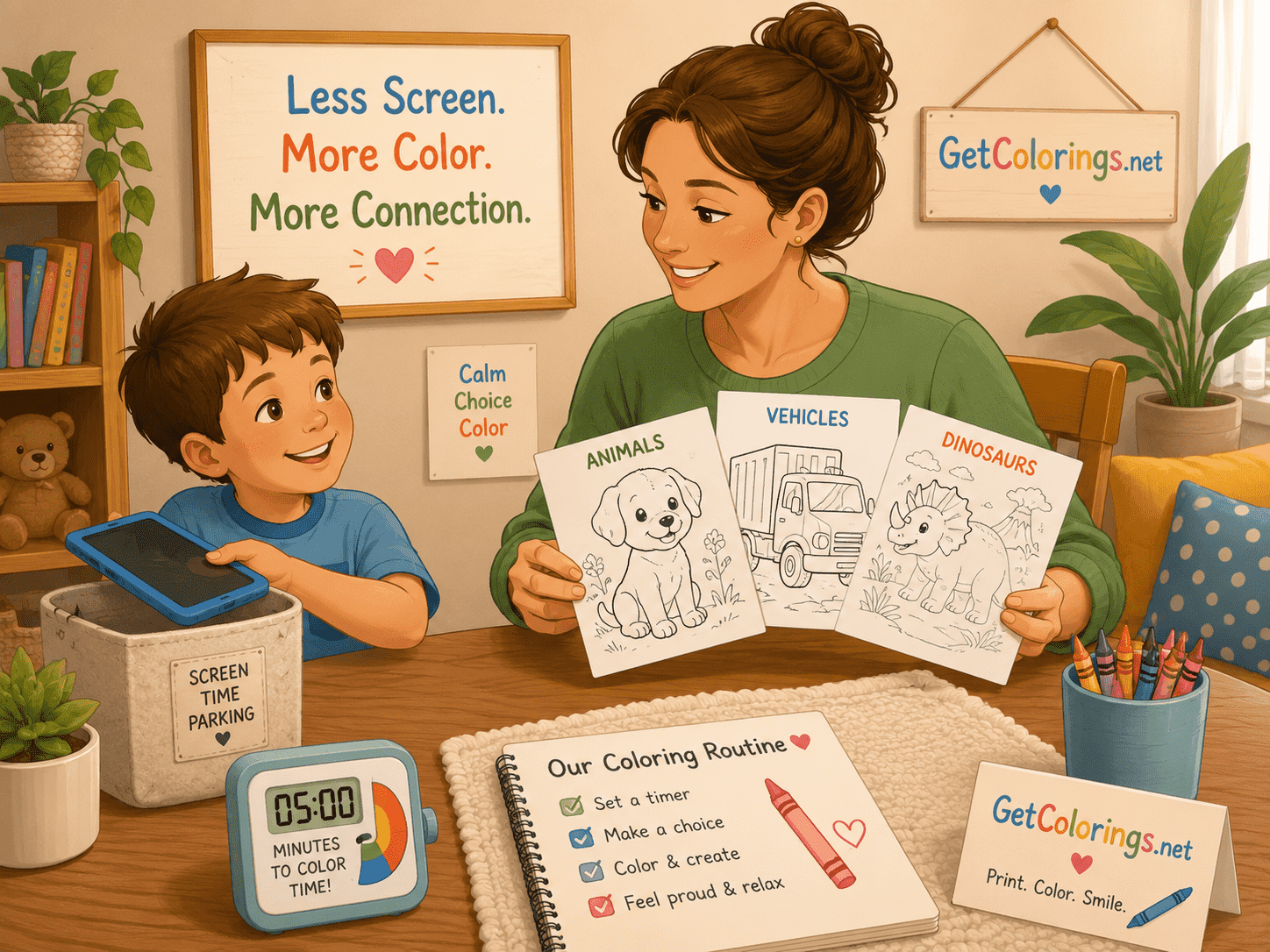
Saying “Turn it off and go color” can make coloring seem less fun.
A quick transition gives your child a moment to switch gears.
Try saying:
“When this episode ends, we’ll choose a coloring page.”
“You have five more minutes, then we’re going to the coloring table.”
“Would you like to color animals or vehicles today?”
That last question helps because it lets your child choose without changing the plan. Screen time still ends, but your child gets some say in what comes next.
Using a timer can help too, especially if it’s used regularly and not as a warning.
Keep a Small Menu of Pages Ready
The simplest coloring routines have a few options ready to go.
Instead of asking a child to search through hundreds of images, offer two or three pages. One might be familiar, one educational, and one slightly different.
For example:
A dinosaur page, a number activity, and a simple garden scene.
The child can choose one and save the others for another day.
The difficulty of the page matters. If a picture is too detailed, it might be frustrating. If it’s too simple, older kids might lose interest. How to Choose the Right Coloring Pages for Your Child’s Age can help you pick the right designs for your child’s skills.
Parents can organize printed pages into a few folders:
- Easy Pages
- Animals and Nature
- Letters and Numbers
- Special Projects
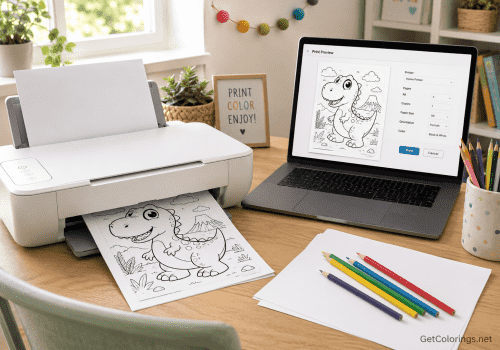
If you prefer to print several pages at once, How to Print Coloring Pages Without Wasting Ink offers practical ways to save cartridges and avoid unnecessary test prints.
Give the Routine a Beginning and an End
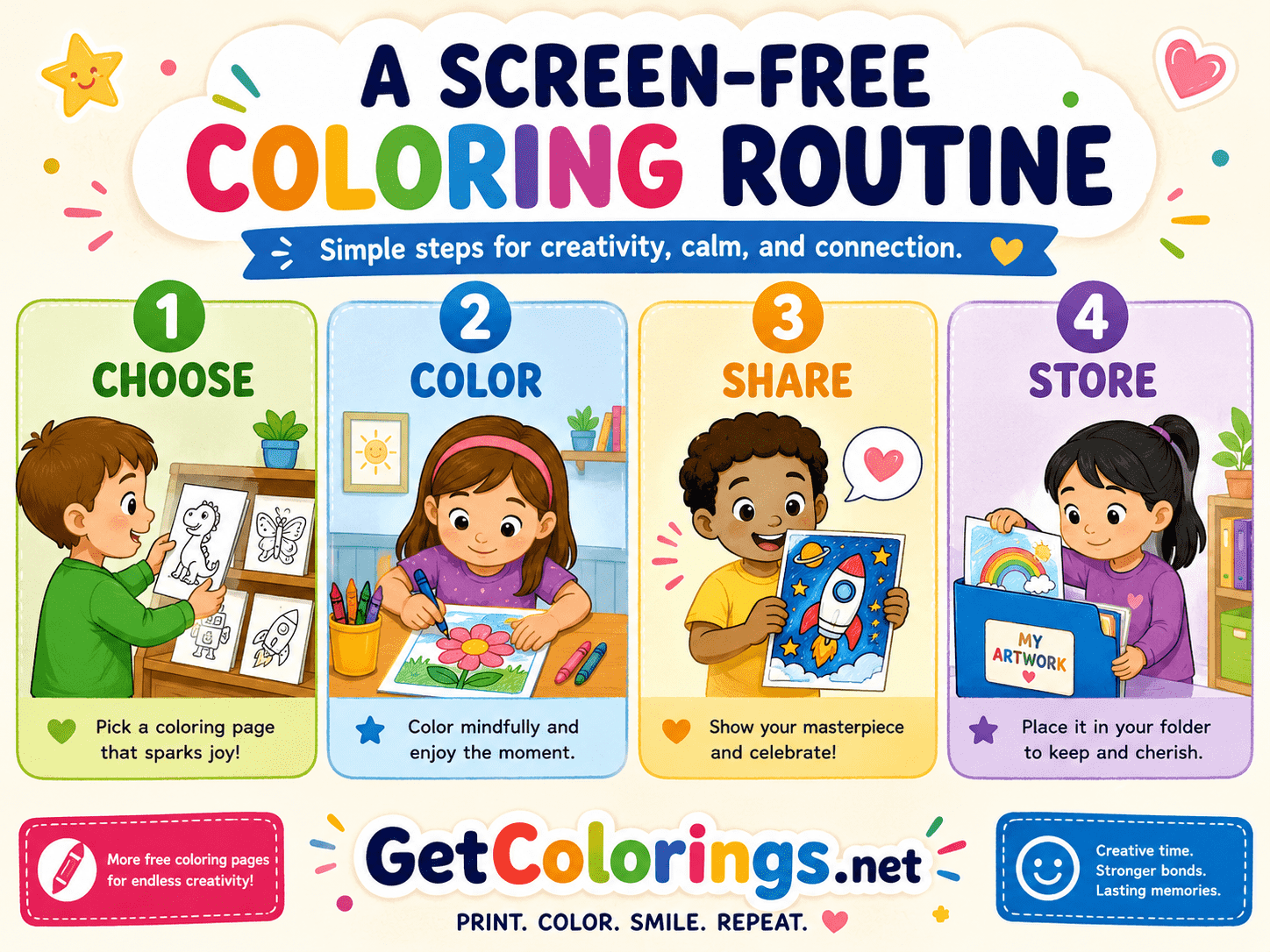
Kids usually join in more easily when an activity has a clear beginning and end.
A simple coloring routine can follow this pattern:
Choose: The child selects one page.
Color: Everyone colors or sits together for a short period.
Share: The child shows one detail or explains one choice.
Store: The page goes into a folder, display area, or recycling pile.
Sharing can take less than a minute.
Ask:
“What part did you enjoy?”
“Which color did you use most?”
“Do you want to finish this tomorrow?”
Try not to judge if the picture is neat or looks real. If you keep things relaxed, your child is more likely to want to color again.
The article What Skills Can Children Practice Through Coloring? A Parent’s Guide explains why choice, conversation, and independence can be as meaningful as the finished picture.
Begin With Ten Minutes
Sometimes parents give up on routines if their child doesn’t sit as long as they hoped.
Start small.
For preschoolers, five to ten minutes may be enough. School-age children may choose to continue longer, especially when they enjoy the subject.
Do not force the child to complete the page before leaving the table. An unfinished picture can return the next day.
It’s often better to stop while coloring is still fun, instead of waiting until your child gets bored.
A simple phrase can close the session:
“Coloring time is finished for today. Let’s put this in your folder.”
With time, your child might choose to color longer on their own.
Join Without Taking Over
Screen-free routines are more fun when they help you connect with your child.
You don’t have to turn it into a lesson. Just sit nearby, color your own page, write a shopping list, or work quietly at the table.
If you color together, try not to fix your child’s picture or suggest a better color for everything.
Instead, describe your own choices:
“I’m using two shades of green.”
“I think I’ll add a cloudy sky.”
“I made a mistake here, but I’m leaving it.”
This shows creativity without making your page the example your child has to follow.
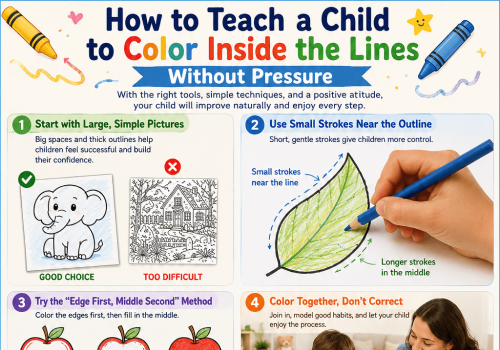
For children practicing control, How to Teach a Child to Color Inside the Lines Without Pressure includes ways to encourage progress without constant correction.
Rotate the Purpose of Coloring Time
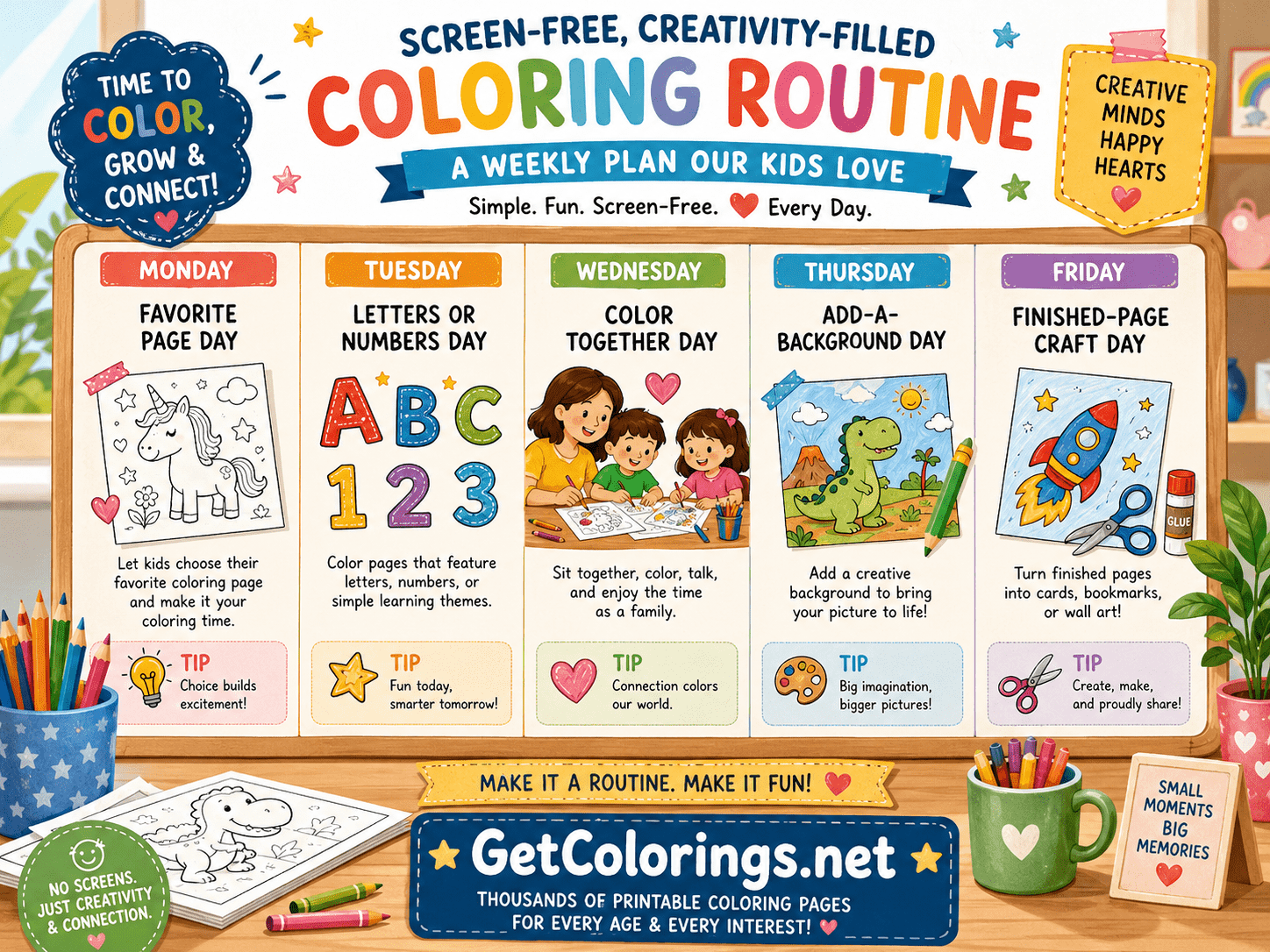
The routine doesn’t have to be exactly the same every day.
Some days can be completely open-ended. On other days, the page can connect to a small learning idea or family event.
Try a simple weekly rhythm:
Monday: Choose any favorite page.
Tuesday: Color-a-letter or number activity.
Wednesday: Color together with a parent or sibling.
Thursday: Add a background or short story.
Friday: Turn a finished page into a card, bookmark, or decoration.
This adds variety without needing to come up with a new routine each day.
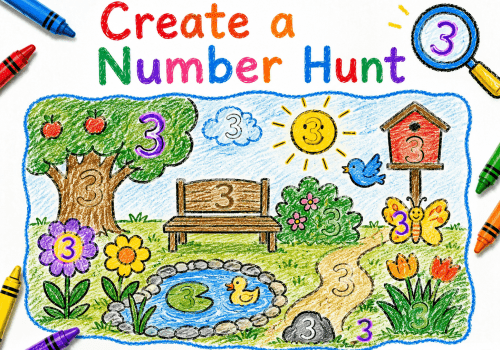
For educational ideas, use 10 Fun Ways to Teach Numbers with Coloring Pages and How to Use Coloring Pages to Teach Letters and the Alphabet.
Finished artwork can also become a craft instead of accumulating in a drawer. 20 Creative Things to Make with Finished Coloring Pages includes simple ways to reuse completed pictures.
What to Do When the Child Refuses
A screen-free routine won’t go smoothly every single day.
If the child refuses, avoid turning coloring into a battle.
Offer one alternative that still keeps the screen away:
- Blank-paper drawing
- Stickers
- Modeling clay
- A puzzle
- Building blocks
- Looking through books
The goal is to give your child more offline choices, not to make coloring the only option.
You can also shorten the routine:
“Let’s color for three minutes, then you can choose another activity.”
Some kids might only want to color once in a while, and that’s okay. A good routine should help your family, not add stress.
The Screen-Free Coloring Formula
A practical routine needs only five parts:
A regular time.
Choose a moment that can realistically be repeated.
Prepared materials.
Keep pages and supplies easy to reach.
A small choice.
Offer two or three options instead of an unlimited search.
A short session.
Begin with five to ten minutes.
A positive ending.
Talk briefly about the picture and store it for later.
Routines are easier when they feel familiar, simple, and part of family time.
Make the Habit Worth Returning To
Kids probably won’t enjoy coloring just because an adult says it’s better than screen time.
They return when the activity is easy to begin, matched to their interests, and free from constant correction.
Prepare the materials before screen time ends. Offer a choice. Sit nearby when possible. Let the picture remain unfinished. Then repeat the routine often enough that it becomes part of the day.
Real success isn’t about making a perfect coloring page. It’s about your child discovering that fun can happen without a screen.