How Teachers Can Use Printable Coloring Pages in the Classroom
Printable coloring pages offer more classroom benefits than you might expect.
They are affordable, simple to set up, and work well with different ages and subjects. You can use a coloring page for quiet time, lesson review, vocabulary practice, or as part of a bigger classroom project.
The main idea is to use coloring with a clear goal. It should support your lesson, give students a helpful break, or keep them interested, instead of just filling time.
Here are some practical ways teachers can use printable coloring pages in daily classroom activities.
1. Use Them for Early Finishers
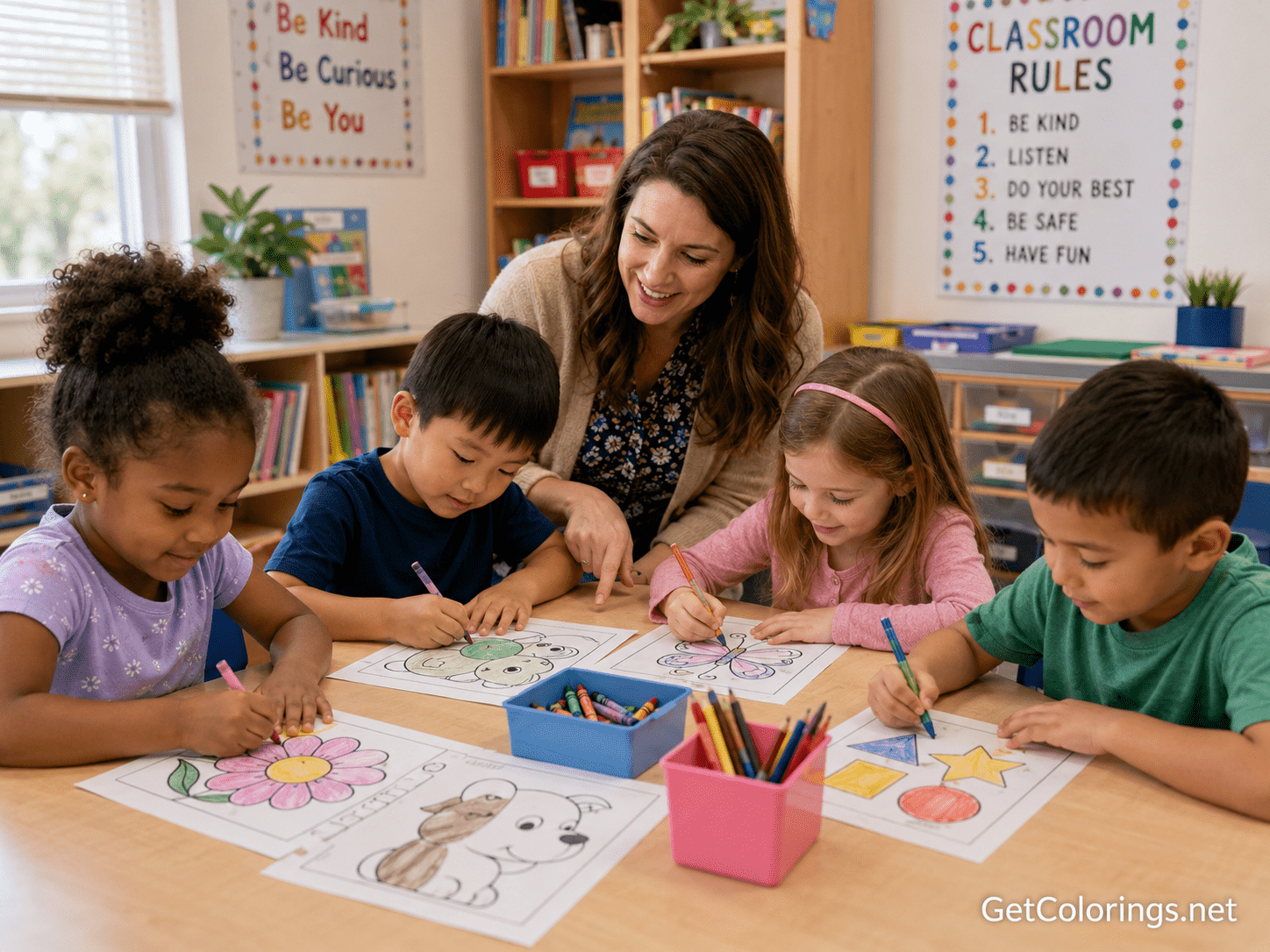
Most classrooms have students who complete their work at different speeds.
Printable coloring pages give early finishers a quiet activity while others finish their work. This helps cut down on extra talking and keeps the classroom running smoothly.
Prepare a small folder with several options, such as:
- Animals
- Nature
- Space
- Vehicles
- Seasons
- Simple patterns
Allow students to pick a page once they finish their main work.
Choose pictures that fit your students’ ages. Younger kids often need bigger spaces and bold outlines, while older students might like more detailed designs. Our guide on How to Choose the Right Coloring Pages for Your Child’s Age can help you pick the best pages.
2. Connect Coloring Pages to the Lesson
Coloring is more meaningful when it connects to what students are learning.
For example:
- Use animal pages during a lesson about habitats.
- Print plant diagrams during a science unit.
- Use maps during geography lessons.
- Choose historical clothing or building pages for social studies.
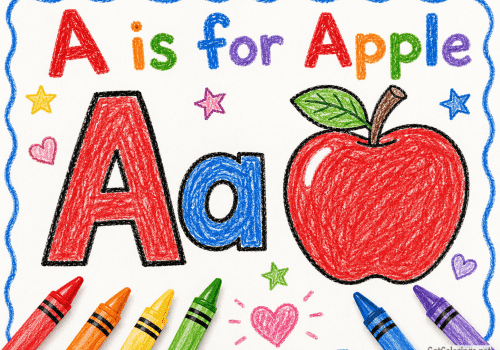
- Use alphabet pictures during early reading activities.
- Print planets and rockets during a space unit.
After coloring, ask students to label parts of the picture or write one fact they learned.
A page showing a butterfly can become a science activity when students color and label the wings, antennae, head, and body. A farm picture can support vocabulary practice by asking students to name the animals and objects.
Adding this step turns a basic coloring page into a useful lesson tool.
3. Create Vocabulary Activities
Coloring pages are especially useful for language learning.
Teachers can ask students to:
- Color the object and write its name.
- Match words with pictures.
- Follow color-based instructions.
- Describe the finished image.
- Write a short sentence about the picture.
- Identify nouns, verbs, or adjectives connected to the scene.
For example, students may receive a garden page with instructions such as:
- Color the flowers red.
- Color the tree green.
- Circle the butterfly.
- Write three words that describe the garden.
These activities bring together reading, listening, vocabulary, and visual learning in one easy task.
4. Use Coloring for Listening Practice
A printable page can become a listening activity when the teacher gives directions aloud.
Students might hear instructions such as:
“Color the largest star yellow.”
“Make the car blue.”
“Add two red flowers near the house.”
This helps students practice careful listening and following directions in order.
Begin with one-step instructions for younger students. Older students can follow two- or three-step directions.
Avoid making the activity too complicated. The goal is to practice listening, not to confuse students with too many details.
5. Add Coloring to Story Time
After students read a story, give them a related coloring page.
They can color:
- A main character
- An important setting
- An animal from the story
- An object mentioned in the text
- A scene similar to one in the book
Then ask students questions such as:
- What happened before this scene?
- What might happen next?
- Which character would you add?
- What colors match the mood of the story?
Older students can write a short caption or paragraph under the picture.
This helps students link visual ideas with reading and storytelling.
6. Offer a Quiet Transition Activity
Transitions between lessons can sometimes become noisy or disorganized.
A quick coloring activity can help students calm down after recess, lunch, group work, or an active lesson.
Choose pages that can be started and stopped easily. Students should not feel they must complete the entire picture in one session.
Giving students five or ten minutes to color can help them relax and get ready for the next activity.
Don’t use coloring as a punishment. It works best as a calm, regular classroom routine.
7. Support Fine-Motor Practice
Young students use their hands and fingers throughout the school day.
Coloring gives students another chance to practice using crayons and pencils, changing direction, and working within different spaces.
Teachers can offer:
- Thick crayons for younger children
- Colored pencils for smaller details
- Broad washable markers for large areas
- Simple pages with strong outlines
- More detailed pages for experienced students
Different tools create different results. The comparison in Crayons vs. Colored Pencils vs. Markers can help teachers choose suitable materials for classroom activities.
Don’t criticize students for coloring outside the lines. Their control will improve over time, and the activity should stay positive.
8. Use Coloring Pages in Group Projects
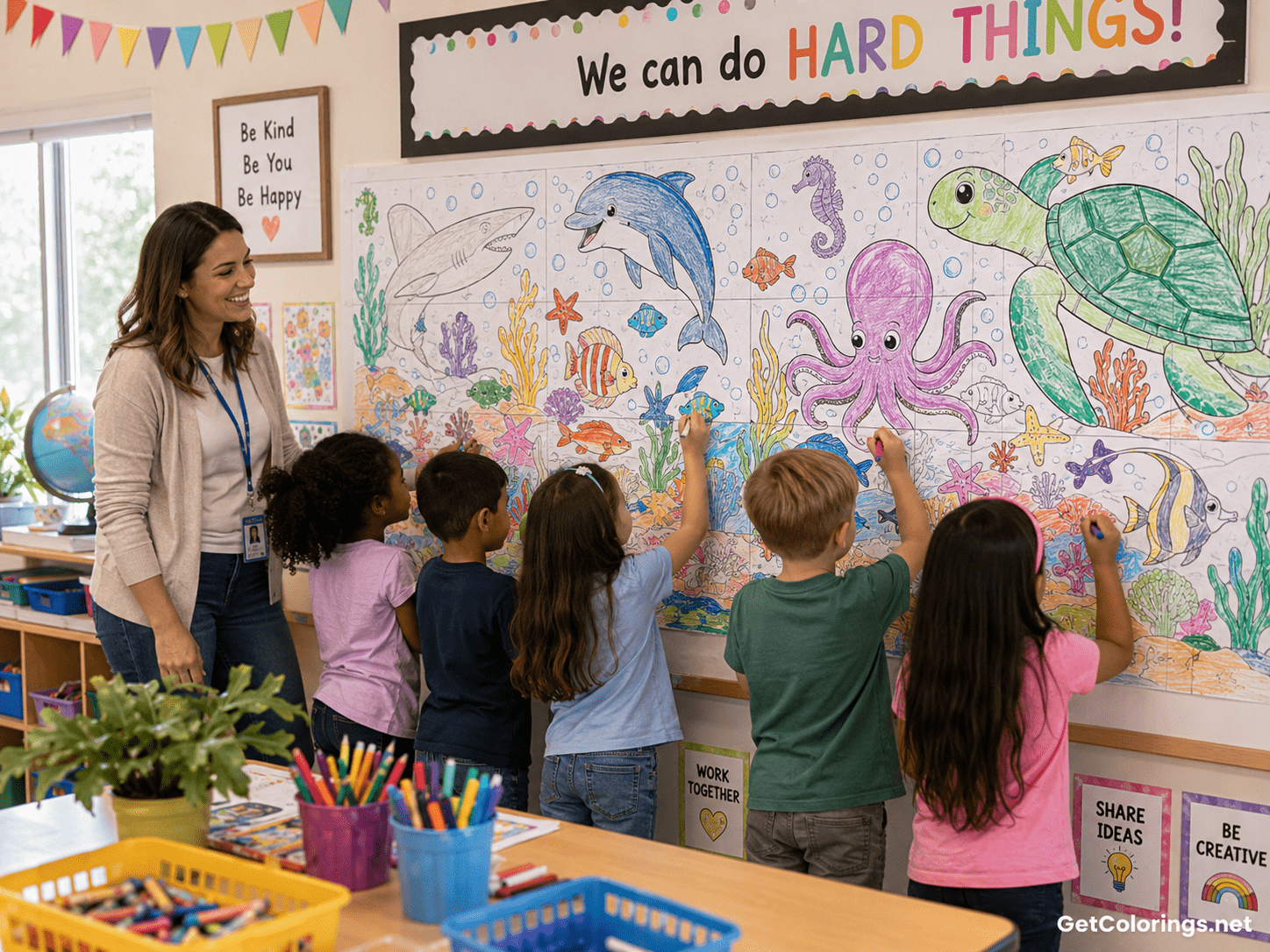
Coloring does not have to be an individual activity.
Divide a large picture into sections and give each part to a different student or group. After coloring, join the sections together to create a classroom display.
Possible projects include:
- A large world map
- An underwater scene
- A garden mural
- A group of animals
- A seasonal display
- A classroom alphabet wall
Teachers can also give every student the same basic shape and ask them to decorate it differently.
For example, each student can color one leaf for an autumn tree or one fish for a classroom ocean display.
Group projects allow students to contribute individual work to a shared result.
9. Create Simple Learning Centers
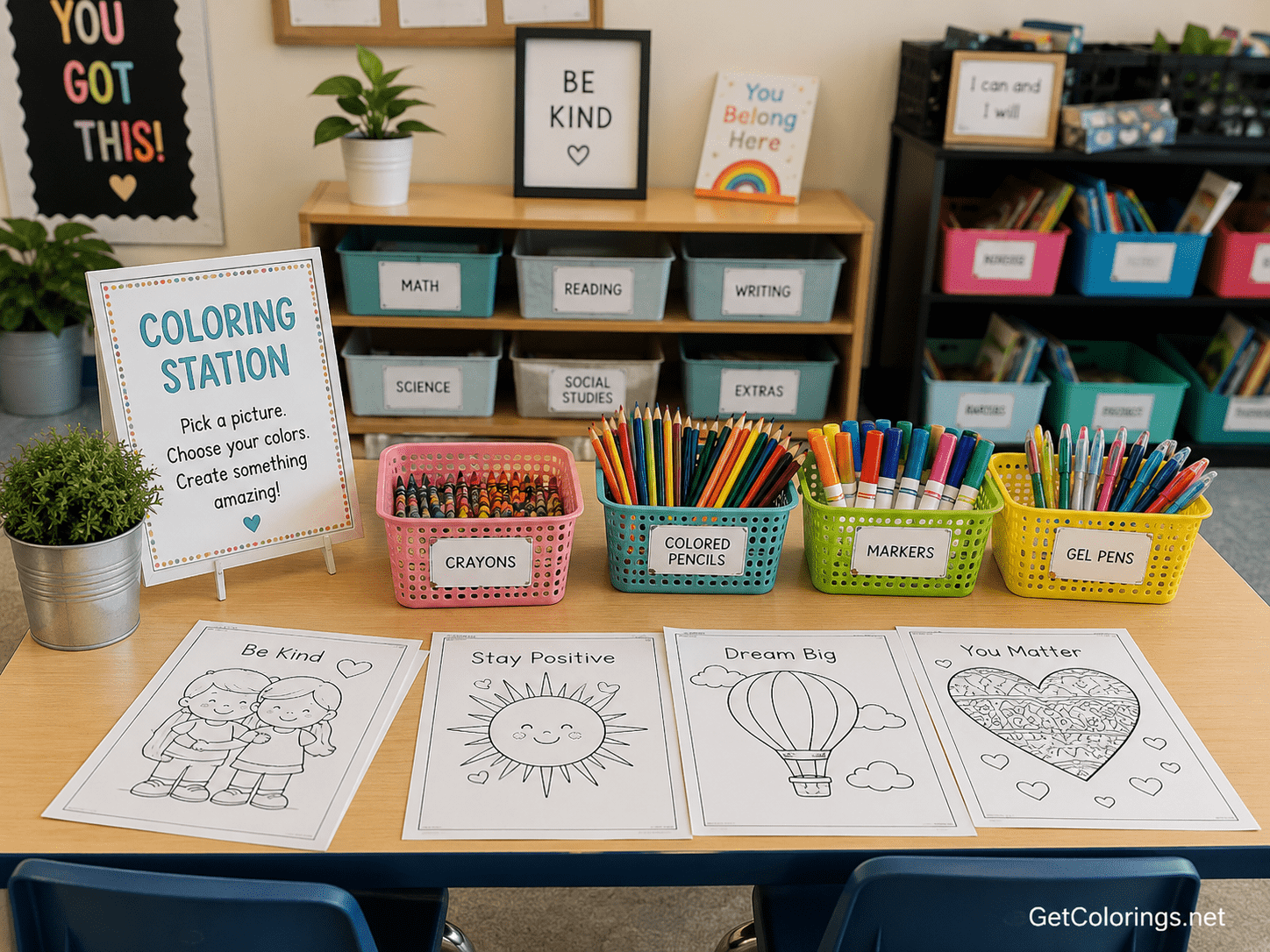
Printable coloring pages work well in classroom stations or learning centers.
A coloring station may include:
- One lesson-related page
- A small set of crayons or pencils
- Written instructions
- A vocabulary list
- A completed example
- A short follow-up question
Students can woStudents can work on their own while you help another group.ructions clear and visible. Young students should be able to understand the activity without having to ask repeatedly what to do.
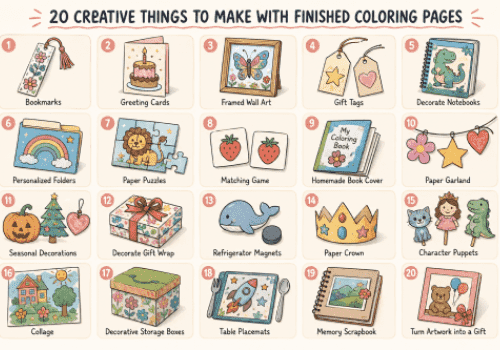
10. Use Finished Pages for Classroom Displays
Completed coloring pages can become part of the classroom environment.
Teachers can display:
- Seasonal artwork
- Science pictures
- Alphabet pages
- Student-designed patterns
- Story scenes
- Cultural or geography projects
Aim to display work from every student, not just the neatest pages.
Classroom displays should celebrate participation, creativity, and effort. Students often feel more confident when their work is valued.
11. Prepare Pages for Substitute Teachers
A folder of printable coloring activities can be useful for substitute-teacher plans.
Include pages that:
- They are easy to understand
- Require basic supplies
- Match current classroom topics
- Include a short writing or labeling task
- Work independently
For example, a substitute activity might ask students to color an animal, write its habitat, and list two facts about it.
This gives students more structure than a random free-time coloring page.
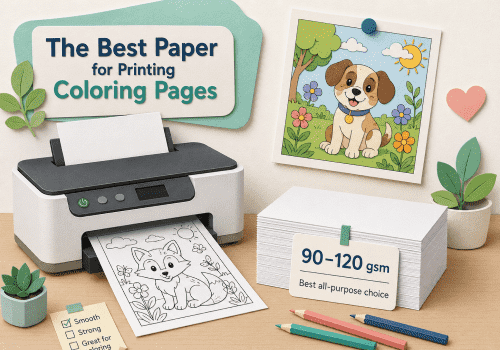
12. Keep Printing Simple and Organized
Teachers often need to print many copies, so using the right settings is important.
Before printing a class set:
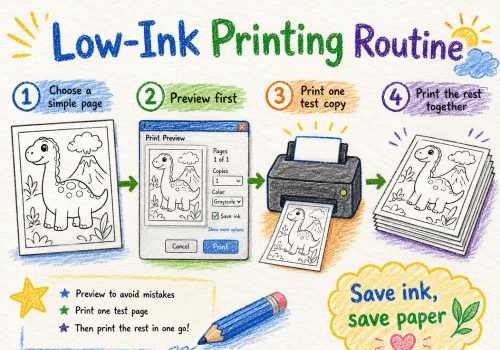
- Print one test copy.
- Make sure the image fits on one page.
- Check that the outlines are dark enough.
- Select black-and-white printing.
- Use standard quality to save ink.
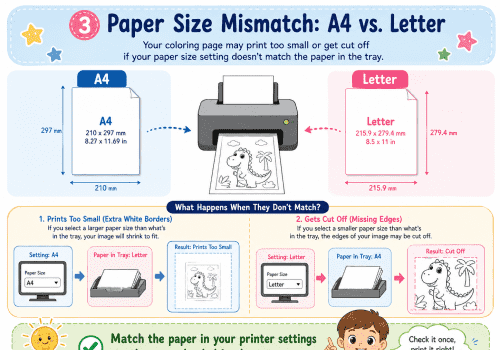
- Confirm the correct paper size.
- Avoid pages with large black backgrounds.
For detailed instructions, see How to Print Coloring Pages at Home. The same basic settings also work for most classroom printers.
Keep printed pages organized by topic in labeled folders. This way, you can reuse them all year.
Common Mistakes to Avoid
Using coloring only as filler
Try to connect the page to a lesson, routine, or classroom goal.
Choosing pages that are too difficult
Tiny spaces may frustrate young students and take too long to complete.
Requiring identical results
Students should not have to copy the teacher’s color choices unless color recognition is part of the lesson.
Correcting every mark
Focus on participation and effort instead of perfect coloring.
Printing unclear images
Blurry or stretched pictures are difficult to use and may waste paper.
Giving too many pages at once
One carefully chosen page usually works better than giving out a big stack.
Final Thoughts
Printable coloring pages can help with many parts of classroom life.
You can use them for early finishers, vocabulary practice, listening activities, lesson reviews, quiet transitions, group projects, and classroom displays.
The best activities combine coloring with a clear goal. Students might label a picture, follow directions, answer a question, or link the image to a recent lesson.
When used thoughtfully, a printable coloring page is more than just a way to fill time. It becomes a flexible classroom tool that’s easy to prepare and fun for students.