Teaching Shapes and Colors with Printable Coloring Pages
Children can start learning about shapes and colors without using complicated worksheets.
A printable page with a house, some clouds, flowers, and a bright sun can introduce circles, squares, triangles, rectangles, and different colors in one easy activity. Children learn as they look, choose, color, and talk about the picture.
It’s best not to teach everything at once. Using one page, a couple of shapes, and a few colors is usually enough for a helpful activity.
Begin Before the Crayons Touch the Paper
Put the coloring page in front of the child, but wait before starting to color.
Take a moment to look at the picture together.
You might say:
“I can see a circle in the sun.”
“The roof looks like a triangle.”
“These windows are squares.”
“Can you find another rectangle?”
Talking about the picture helps children see that shapes aren’t just on classroom cards. They show up in houses, vehicles, animals, toys, food, and many everyday things.
For younger children, begin with four basic shapes:
- Circle
- Square
- Triangle
- Rectangle
After children know these shapes, you can add stars, hearts, ovals, diamonds, and semicircles.
Choose pages with big, clear sections instead of lots of small details. The guide How to Choose the Right Coloring Pages for Your Child’s Age explains how to pick the right level for your child.
Give Each Shape a Color
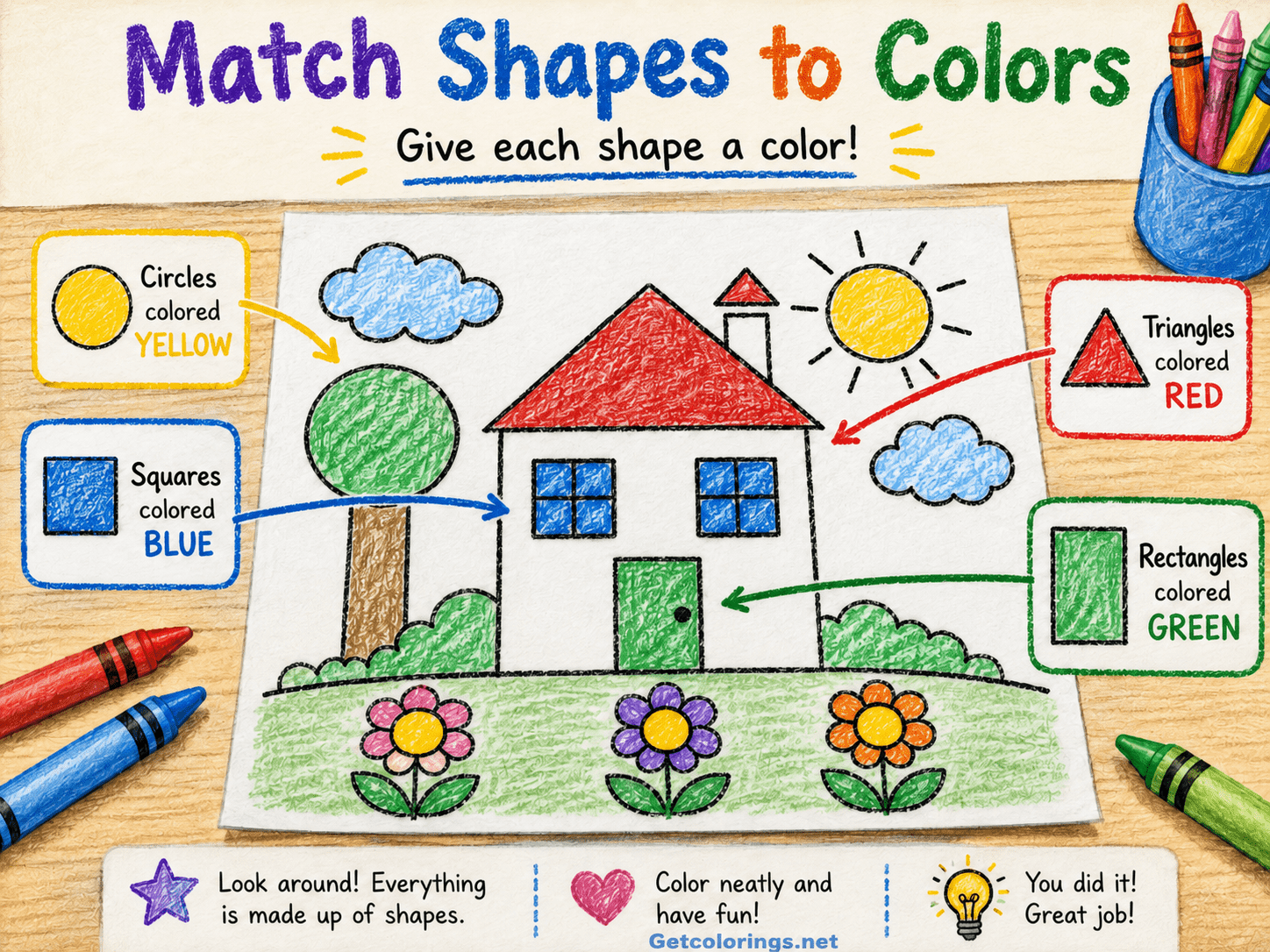
An easy way to start is by giving each shape its own color.
For example:
“Color every circle yellow.”
“Make the squares blue.”
“Color the triangles red.”
The child now needs to recognize the shape, remember the instruction, and choose the correct coloring tool.
If this is new for the child, begin with just two shapes. Too many instructions at once can be confusing.
You can later reverse the exercise. Instead of naming the shape, name the color:
“Can you find something that should be green?”
“Which shape would you like to color purple?”
This lets children make more choices while still practicing color words.
Turn the Page Into a Shape Hunt
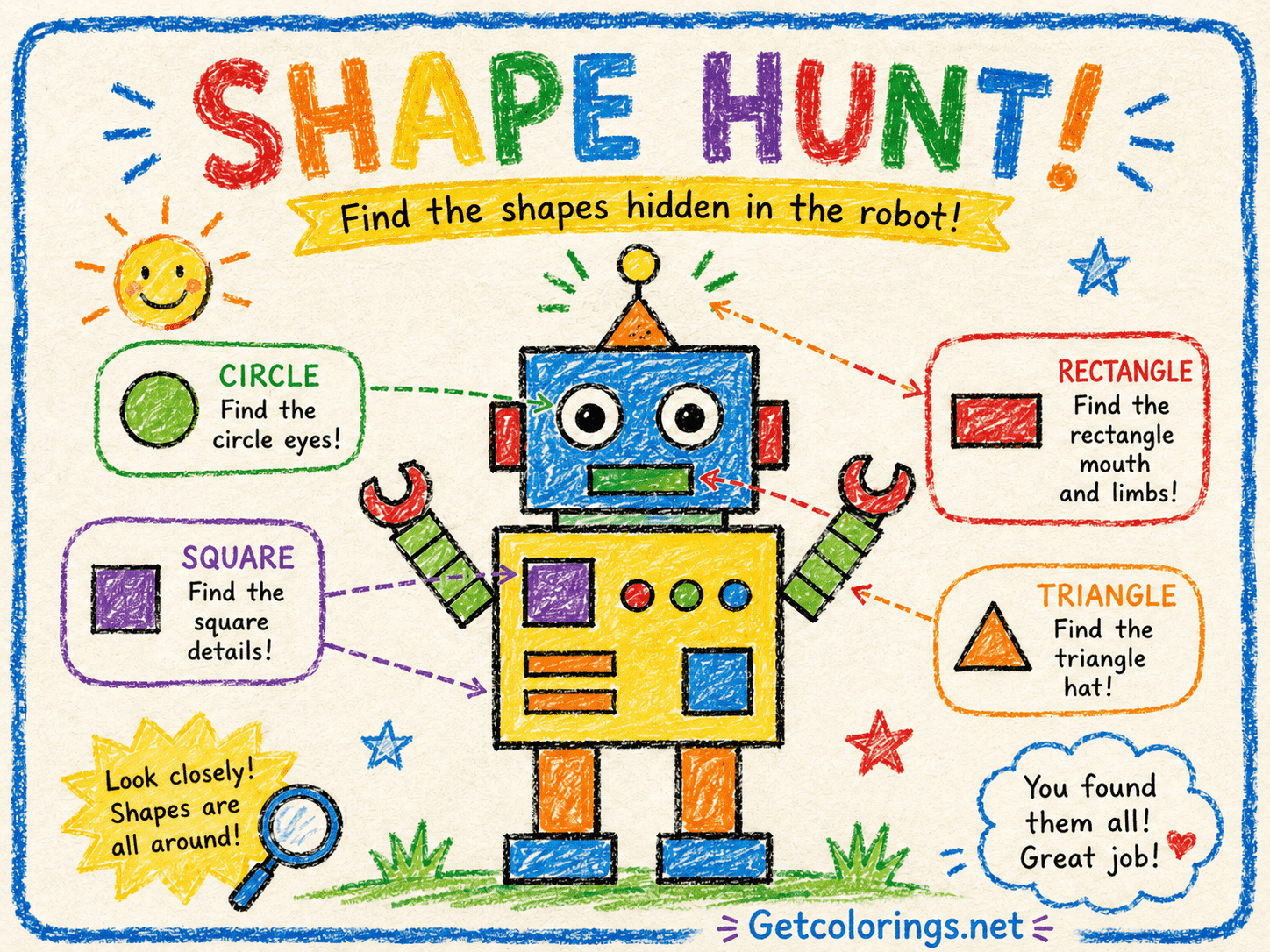
You can turn a printable picture into a search game.
Pick a page with a town, playground, robot, train, or house. Ask the child to find shapes hidden in things they know.
A robot might contain:
- A square body
- A rectangular mouth
- Circular eyes
- Triangular buttons
A train may include:
- Circular wheels
- Rectangular carriages
- Square windows
- A triangular front detail
Let the child take the lead sometimes. Ask them to show you a shape and have you find it.
Kids often get more interested when they can give the instructions.
You can also use a shape hunt in the classroom as a learning center or for kids who finish early. More ideas are in How Teachers Can Use Printable Coloring Pages in the Classroom.
Compare Shapes That Look Similar
Some shapes are easy to confuse.
Children might call every four-sided shape a square or mix up circles and ovals. Coloring pages make it easy to compare these shapes.
Put a square and a rectangle next to each other. Explain that both have four sides, but a square’s sides are all the same length, while a rectangle usually has two longer sides.
Next, compare a circle and an oval. A circle is round all the way around, but an oval looks stretched out.
Focus on what the shapes look like, not technical details. Ask:
“Which one looks taller?”
“Which one looks like an egg?”
“Which shape could be a wheel?”
“Which one could be a door?”
Children are more likely to remember the difference when it is connected to a familiar object.
Use Colors to Sort and Group
Coloring pages can also help children learn to sort things into groups.
Choose a page containing several repeated items, such as balloons, leaves, fish, blocks, or flowers.
Ask the child to:
Color all large circles blue.
Color all small circles yellow.
Make every triangle green.
Use red for shapes with four sides.
This activity teaches about color, shape, size, and sorting all at once.
Make sure the activity matches the child’s age. Younger kids might sort by just one thing, while older preschoolers can follow two instructions at once.
For example:
“Color the small triangles orange.”
This means the child has to look at both size and shape before picking a color.
Let Children Build Pictures from Shapes
Once children can spot shapes in a coloring page, they can use those shapes to make their own pictures.
Begin with a few simple ideas:
- A square and a triangle can become a house.
- A circle with several triangles can become a sun.
- Two circles and a rectangle can become a car.
- Several triangles can become a mountain range.
- A large oval and four small ovals can become an animal.
Parents or teachers can sketch the shapes first, then let the child finish and color the picture.
The finished drawing doesn’t have to look real. The goal is to help children see how simple shapes can come together to make something new.
This activity also supports the decision-making and imagination discussed in What Skills Can Children Practice Through Coloring? A Parent’s Guide.
Explore Warm and Cool Color Choices
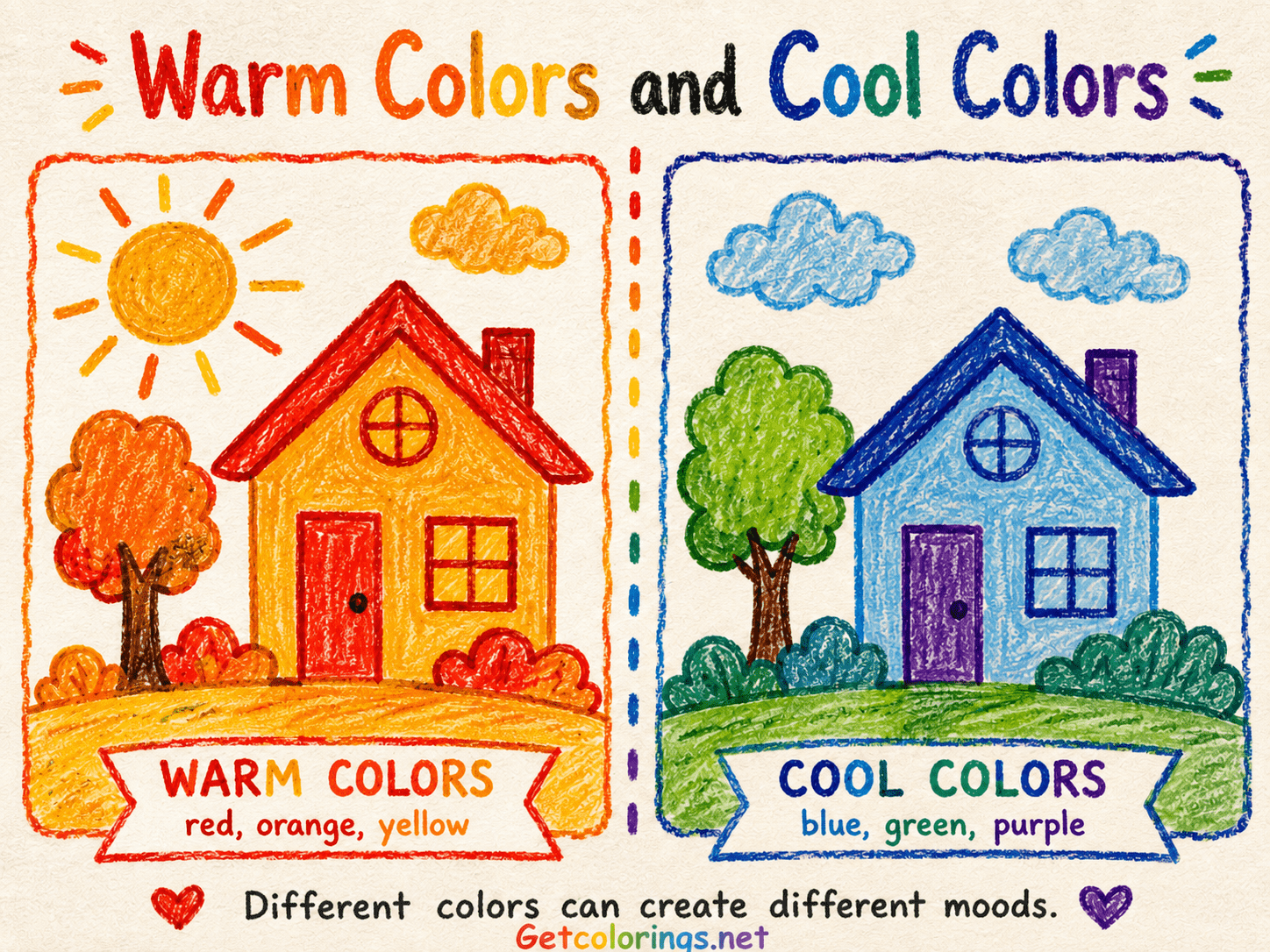
After children know a few color names, you can show them how colors can change how a picture feels.
Print two copies of the same simple page.
On the first copy, use warm colors such as red, orange, and yellow. On the second, use cool colors such as blue, green, and purple.
Ask:
“Which picture feels sunny?”
“Which one feels calm?”
“Which colors would you use for winter?”
“Which version looks more energetic?”
This doesn’t have to be a formal art lesson. The main idea is to help children see that colors can create different feelings.
A more detailed introduction to these ideas is available in Color Theory for Kids: A Fun Beginner’s Guide.
Connect the Page to the Real World
After coloring, look for the same shapes and colors around the room.
You might find:
- A circular clock
- A rectangular book
- A square cushion
- A triangular road sign
- A blue cup
- A green plant
- A red toy car
Ask the child to choose one shape and find three real objects that match it.
This step matters because it shows that learning shapes and colors goes beyond the coloring page. They’re part of everyday life.
Children can also draw something they found and add it to the background of their coloring page.
Use the Right Coloring Tools
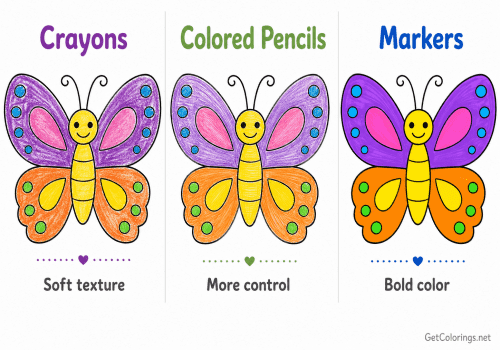
Big crayons are usually easiest for toddlers and young preschoolers. Colored pencils give more control for small shapes, and washable markers make bright, bold colors.
The best tool depends on the page and how much control the child has. Crayons vs. Colored Pencils vs. Markers explains the pros and cons of each.
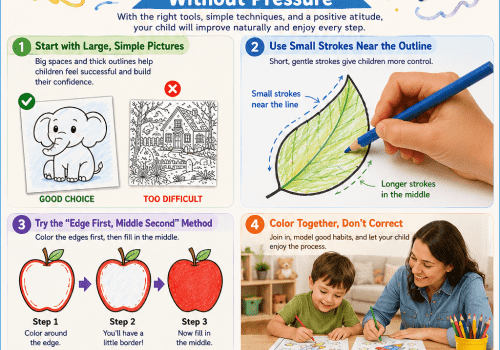
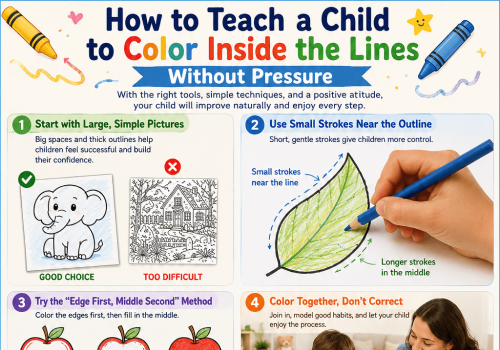
If a child has trouble with small spaces, pick a simpler page instead of pushing for perfect coloring. The tips in How to Teach a Child to Color Inside the Lines Without Pressure can help keep things positive.
Create a Shapes-and-Colors Book
Keep several finished activities instead of treating each page as a single worksheet.
A small homemade book might include:
- My Circle Page
- Squares Around Me
- A Picture Made from Triangles
- Warm Colors
- Cool Colors
- My Favorite Shape
- My Favorite Color
- A blank page for an original drawing
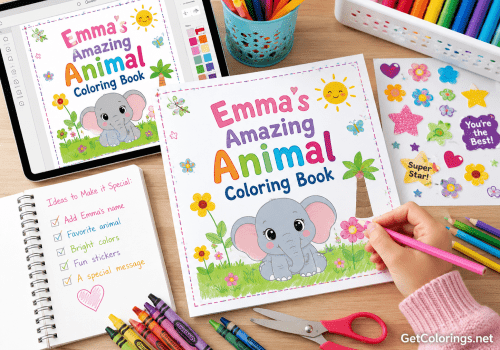
Write the child’s name on the cover and let them pick the colors.
The instructions in Turn Your Ideas into a Personalized Coloring Book explain how to arrange, print, and bind the pages.
When the Activity Is Working
A good shapes-and-colors activity doesn’t have to end with a perfectly colored page.
It is working when the child begins noticing shapes in new places, uses color names naturally, compares objects, follows a simple instruction, or invents a picture from basic forms.
Keep the sessions short, repeat favorite activities, and introduce new shapes gradually.
The real achievement is not completing the worksheet. It is helping the child look at an ordinary picture and begin to recognize the visual building blocks hidden within it.