Crayons vs. Colored Pencils vs. Markers: Which Is Best for Kids?
Children often choose the brightest coloring tool when given crayons, colored pencils, and markers.
However, the most attractive option may not be the most suitable for the activity.
Each coloring tool offers a unique experience. Crayons are forgiving and easy to use, colored pencils provide more control, and markers deliver bold color with little effort. The best choice depends on the child’s age, experience, the coloring page, and your preferred level of cleanup.
No single tool suits every situation. Many children benefit from using all three at different times.
This guide compares crayons, colored pencils, and markers to help parents and teachers choose the most appropriate option and avoid unnecessary purchases.
The Quick Comparison
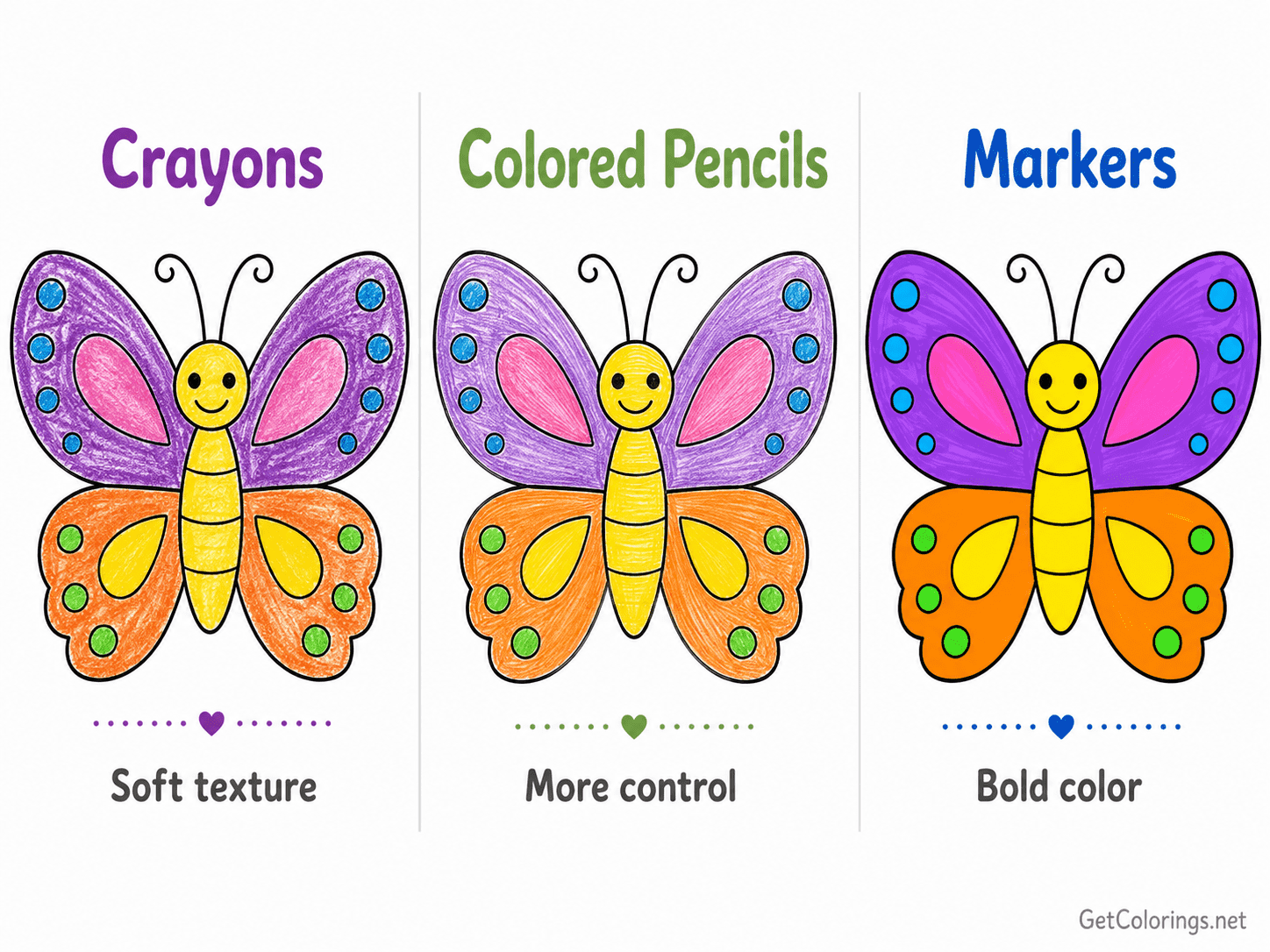
Here is the simplest way to think about the three materials:
Crayons are best for beginners.
They are easy to hold, spill-resistant, and suitable for large coloring areas.
Colored pencils are best for control and detail.
They work well for older children, smaller sections, shading, and more careful coloring.
Markers are best for bright, fast results.
They require little pressure and produce strong color, but they can bleed through paper and make a bigger mess.
A large professional art set is not necessary. A basic set of good-quality tools is often more effective than many low-quality or hard-to-use supplies.
Crayons: The Most Beginner-Friendly Choice
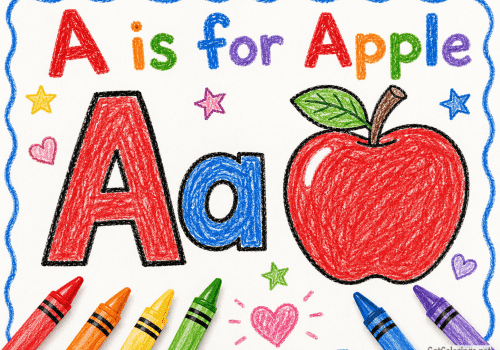
Crayons are often the first coloring tool children use. They are simple, familiar, and come in various sizes.
For toddlers and preschoolers, thick crayons are easier to hold than thin pencils. They also let children make visible marks without requiring precise control.
What crayons do well
Crayons are especially useful for:
- Large and simple coloring pages
- Toddlers and preschool children
- Short coloring sessions
- Travel activities
- Classrooms and group projects
- Children who press hard while coloring
- Parents who want an easy-to-clean option
Crayons create soft, textured color rather than a smooth finish. Younger children often enjoy seeing immediate results as they color.
Crayons are also forgiving because they rarely leak, dry out, or leave permanent marks as quickly as markers.
Where crayons can be frustrating
Standard crayons are not ideal for small details. Their tips widen with use, making it difficult to fill narrow spaces.
Some inexpensive crayons have less pigment, so children press harder to achieve visible color. This can lead to broken crayons or torn paper.
Crayons may leave small white spaces between strokes. This is normal and not a sign of poor coloring.
For children who are just learning to control their movements, choose simple pages with large spaces and thick outlines. Our guide on How to Teach a Child to Color Inside the Lines Without Pressure explains how page difficulty and tool size can make practice easier.
Best crayon choice by age
For younger children, try:
- Jumbo crayons
- Short crayons
- Triangular crayons
- Washable crayons
Older children may prefer twistable crayons because they are easier to grip and do not require peeling paper.
Colored Pencils: Better Control and More Detail
Colored pencils offer more precision than crayons. Their narrow tips make it easier to outline, fill small spaces, add patterns, and blend shades.
They are most useful once a child can hold a pencil comfortably and understands that excessive pressure may break the tip.
What colored pencils do well
Colored pencils are a strong choice for:
- Detailed coloring pages
- School-age children
- Smaller sections
- Animals, flowers, buildings, and patterns
- Shading and blending
- Children who enjoy careful work
- Pages that may be displayed or given as gifts
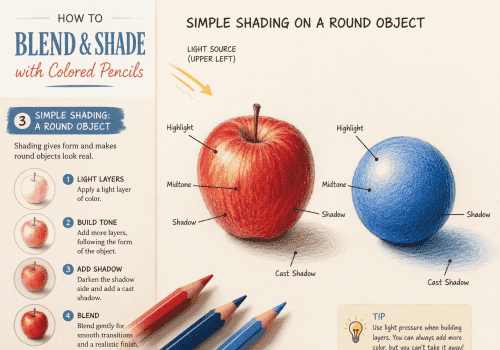
Unlike crayons, colored pencils let children adjust the intensity of their colors. Light pressure creates a soft shade, while firmer pressure produces a darker result.
Children can also layer colors, such as yellow under orange, blue over green, or brown over red, to create different effects. This flexibility makes colored pencils ideal for children seeking more creative control.
Where colored pencils can be frustrating
Colored pencils require more hand strength than markers. Children may find the color too light or tire when covering large areas.
The tips can break, especially if pencils are dropped or sharpened too aggressively.
Very young children may find standard pencils too thin and hard to control. Sharp points also require adult supervision.
Colored pencils can feel slow for large background areas. Children may prefer pencils for details and switch to crayons for wide spaces like the sky or grass.
Choosing suitable colored pencils
Look for pencils that:
- Produce visible color without excessive pressure
- Sharpen cleanly
- Have strong cores that do not constantly break
- Feel comfortable in the child’s hand
- They are clearly labeled as non-toxic
A basic set of 12 or 24 colors is enough for most children. Larger sets can be fun, but too many similar shades may overwhelm younger users.
When selecting the picture itself, match the level of detail to the child’s ability. The article How to Choose the Right Coloring Pages for Your Child’s Age can help you decide when a child is ready for more complicated designs.
Markers: Bright Color With Less Effort
Markers are usually the fastest way to achieve bold, smooth color.
They glide across the page and require less pressure than crayons or pencils. This can be satisfying for children who are frustrated by faint results from other materials.
What markers do well
Markers are useful for:
- Bright, colorful pictures
- Posters and classroom displays
- Children who prefer smooth color
- Large headings and decorative letters
- Quick activities
- Cardstock and thicker paper
- Children with enough control to replace the caps
Broad-tip markers fill large spaces quickly, while fine-tip markers are better for narrow sections and patterns.
Markers can make simple coloring pages more engaging. Even basic images appear vivid when colored with strong, clean shades.
Where markers can be frustrating
Markers are the least forgiving of the three options.
They may:
- Bleed through thin paper
- Spread beyond an outline
- Dry out when left uncapped
- Leave permanent marks on furniture or clothing
- Tear paper when used repeatedly in one area
- Produce darker patches where strokes overlap
Because markers produce immediate color, mistakes are more visible and difficult to correct.
Washable markers are usually the safest choice for younger children, but “washable” does not guarantee complete removal from all fabrics or surfaces.
Always place an extra sheet of paper underneath the coloring page. This protects the table and prevents ink from transferring to the next page.
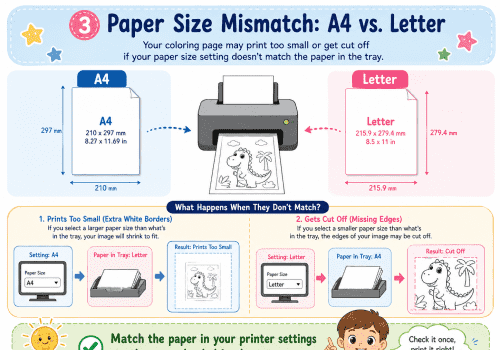
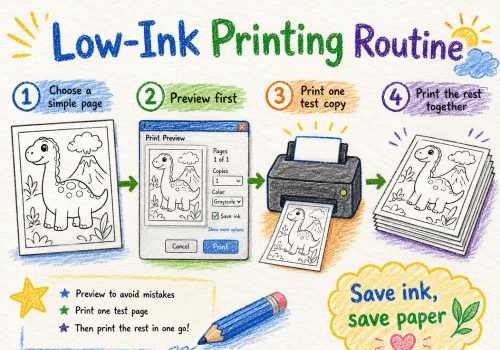
For more advice on paper thickness and printer settings, see How to Print Coloring Pages at Home.
Which Tool Is Best for Different Situations?
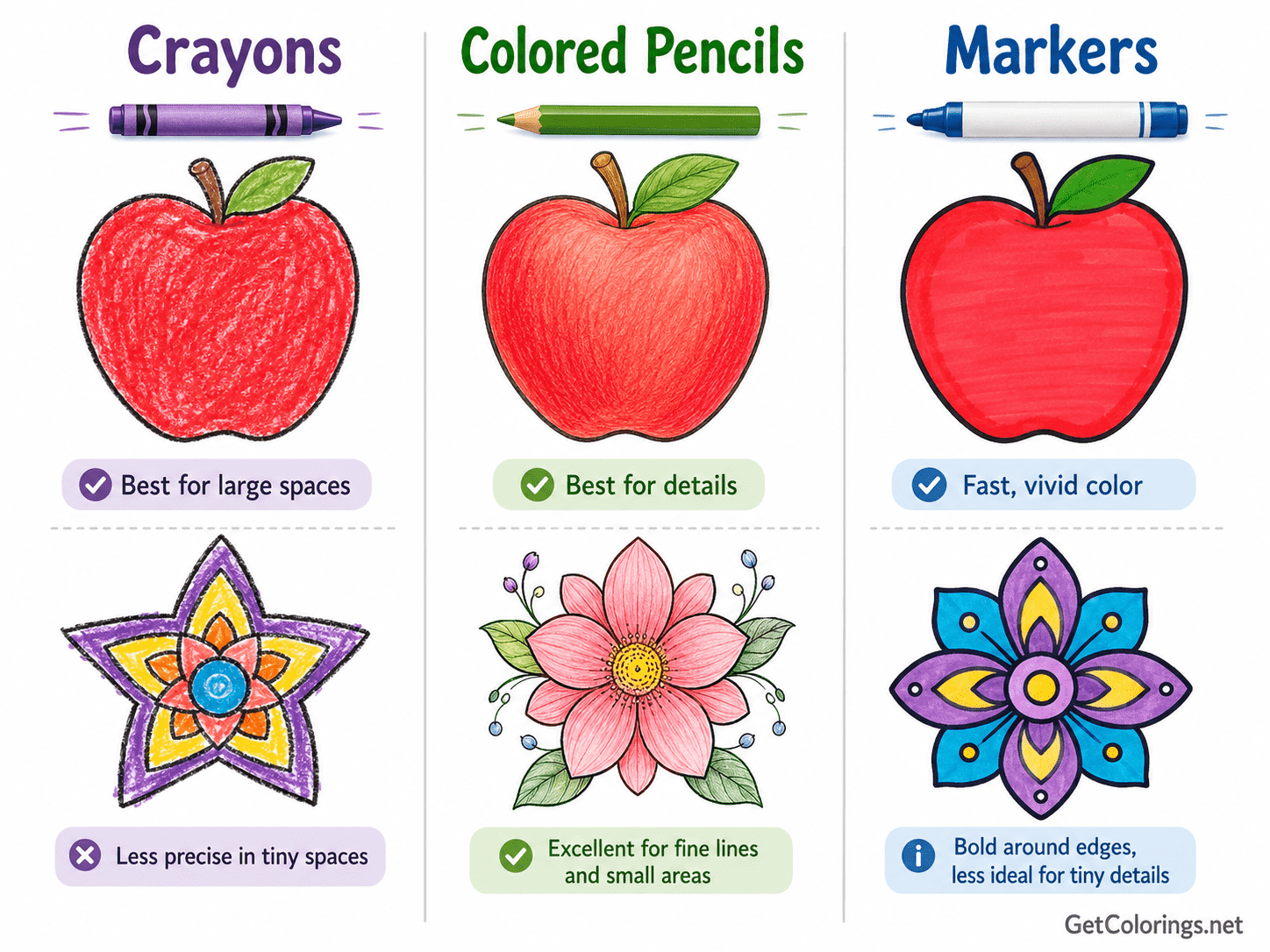
Rather than selecting a single material, match the tool to the specific activity.
For toddlers beginning to color
Choose thick crayons.
They are easier to hold, create less mess, and work well with simple pictures. At this age, focus on exploring movement and color rather than producing a neat final image.
For preschoolers practicing control
Use crayons or broad, washable markers.
Crayons provide resistance, helping children become aware of their hand movements. Markers move more easily but may cross outlines more quickly.
Try both and watch which one the child controls more comfortably.
For children coloring small details
Choose colored pencils.
Their narrow points are easier to guide into small spaces. Use a well-sharpened pencil, but avoid making the tip unnecessarily sharp.
For a fast, colorful classroom activity
Choose washable markers or crayons.
Markers produce brighter results, while crayons are easier to distribute, collect, and clean.
For travel
Crayons are usually the simplest option.
They do not require sharpening, are less likely to stain, and can be carried in a small container. Twistable crayons are also convenient because they do not have loose paper wrappers.
For homemade cards and decorations
Use colored pencils or markers on thicker paper.
Markers create bold designs, while pencils are better for shading and small decorative elements.
For a child who becomes tired easily
Try markers.
They require less pressure. Broad-tip markers can quickly fill large areas.
For a child who rushes
Try colored pencils or crayons.
The added resistance may encourage slower, more controlled movements. Highly fluid markers can increase the likelihood of rushing.
Can Children Use More Than One Tool on the Same Page?
Yes. In fact, combining materials often produces the best experience.
A child might use:
- Crayons for large background areas
- Colored pencils for eyes, patterns, and small details
- Markers for headings or bold accents
This is sometimes called mixed-media coloring, though the activity does not require a special name.
Combining tools also helps children notice differences in texture, pressure, line thickness, and color intensity. These are some of the practical skills discussed in What Skills Can Children Practice Through Coloring? A Parent’s Guide.
Test markers on crayons or pencils before using them, as crayon wax may prevent marker ink from spreading evenly.
Paper Matters More Than Many Parents Expect
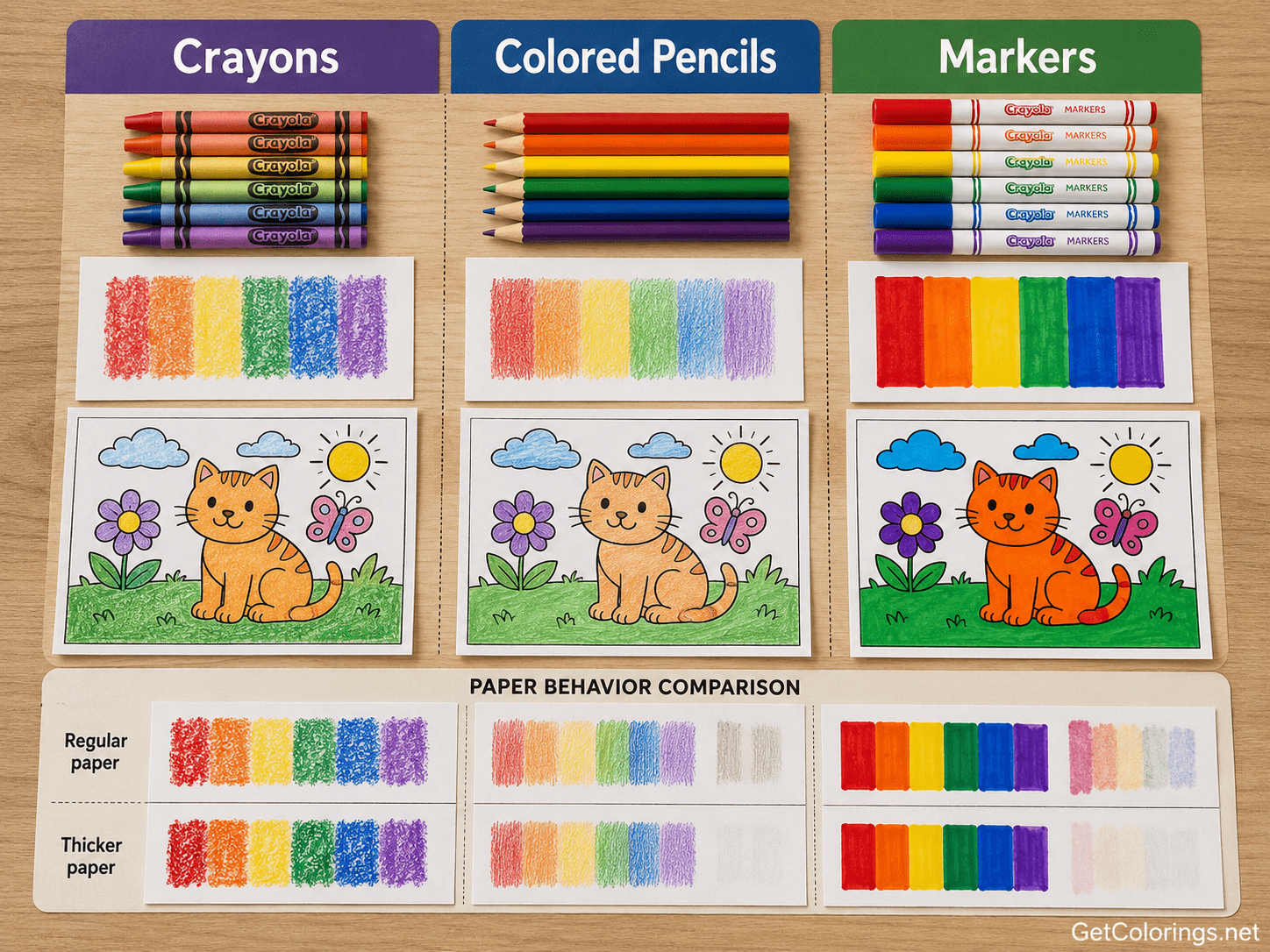
The same coloring tool can behave very differently depending on the type of paper.
Regular printer paper
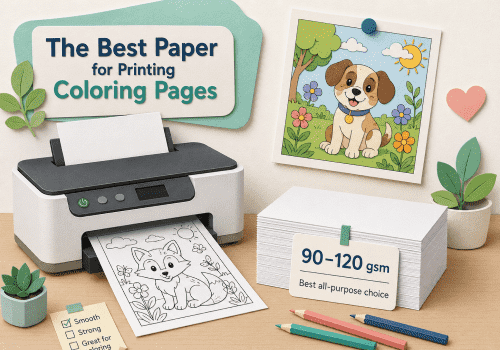
Regular 75-80 gsm paper works well with crayons and colored pencils, but markers may bleed through it.
Slightly thicker paper
Paper weighing 90-120 gsm is more durable and works well with pencils, crayons, and many washable markers.
Cardstock
Cardstock is useful for markers, greeting cards, masks, bookmarks, and crafts. Check if your printer supports its thickness.
Smooth paper
Smooth paper works well for markers and detailed pencil coloring.
Textured paper
Textured paper can create interesting effects with crayons and pencils, but it may be harder to fill evenly.
Before printing multiple copies, test one page with the materials the child will use.
Common Mistakes When Choosing Coloring Supplies
Buying the largest set available
More colors do not always create a better experience. A smaller set with strong, reliable pigment may be more effective.
Choosing tools only by the child’s age
Age is a starting point, but hand control, interest, and the coloring page are also important.
Using markers without protecting the surface
Always place spare paper or a washable mat underneath the coloring page.
Expecting every color to look smooth
Crayons naturally create texture, and colored pencils may show individual strokes. This is a normal part of their appearance.
Correcting how firmly the child presses
Some children press lightly, while others press firmly. Offer demonstrations and appropriate tools instead of frequent correction.
Throwing away broken crayons
Short crayons remain useful and may help children use their fingers more carefully.
A Simple Home Coloring Kit
A practical coloring kit does not need to be expensive.
Consider keeping:
- 12-24 crayons
- 12 colored pencils
- 8-12 washable markers
- A child-safe sharpener
- Regular printer paper
- A few sheets of thicker paper
- A folder for unfinished pages
- A washable table mat
Replace tools when they become too dry, hard to sharpen, or frustrating to use.
Organizing supplies in separate cups or boxes makes it easier for the child to choose without emptying everything onto the table.
Frequently Asked Questions
Are crayons or colored pencils better for toddlers?
Thick crayons are usually easier for toddlers to hold and use. Colored pencils may be too thin and require greater control.
Are markers bad for coloring pages?
No. Markers are useful for bright, smooth coloring, but they may bleed through thin paper. Washable markers and a protective sheet underneath are good choices.
Which tool is best for coloring inside the lines?
Colored pencils offer the most precision, but thick crayons may be easier for younger beginners. The difficulty of the page matters as much as the tool.
Can children blend crayons?
Yes. Children can layer different crayons or use lighter and darker shades. The result will be more textured than with blended colored pencils.
Why does my child prefer markers?
Markers create strong color quickly and require little pressure. The immediate result can be more satisfying.
How many colors does a child need?
A basic set of 12 colors is enough for most activities. Additional shades are optional.
Final Verdict
Choose crayons when simplicity, durability, and easy cleanup matter most.
Choose colored pencils when the child wants better control, smaller details, shading, or more realistic results.
Choose markers when bold color, smooth coverage, and low pressure are the priority.
The best coloring tool is the one that fits the child, the page, and the moment. Keep all three available when possible, and let children discover which material helps them enjoy the creative process.